TL;DR
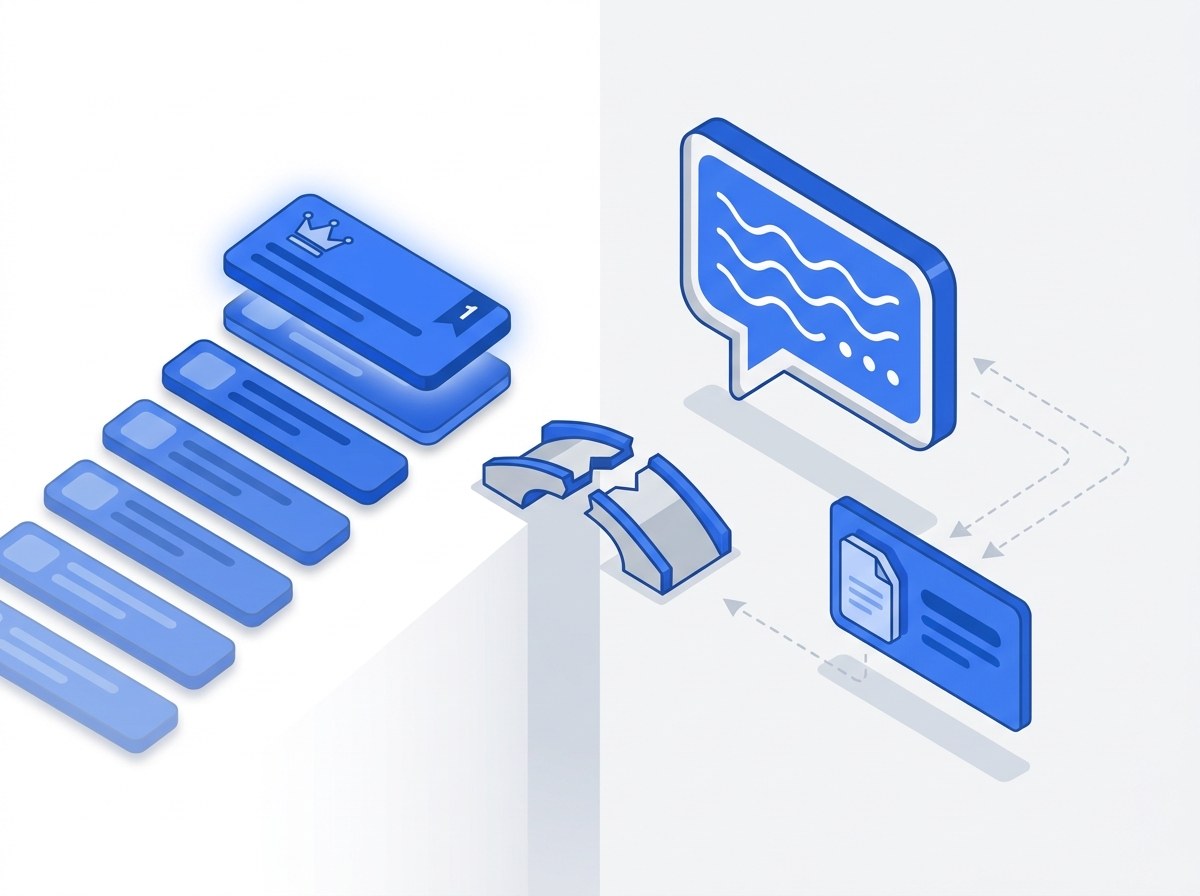
- Different indexes: ChatGPT uses Bing, Perplexity uses its own curated set, AI Overviews use Google with different weighting.
- Different signals: AI engines weigh structured data, answer-shape, and freshness more than the standard SERP does.
- Specific beats comprehensive: "Services" pages that win Google lose AI. Problem-owned pages win AI.
- Foursquare is invisible to Google: But feeds 70% of ChatGPT's local recommendations.
- Fastest fix: Audit Bing, claim Foursquare, ship FAQ + LocalBusiness schema.
The Counterintuitive Truth: Rankings and Citations Are Separate Signals
Page-1 Google ranking and AI citation are not the same achievement. They are not even on the same scoreboard. We audit 5-10 businesses per week and the pattern is consistent. A business that ranks #1 organically for "emergency plumber Phoenix" gets recommended by ChatGPT roughly 30-40% of the time. The other 60-70% of the time, ChatGPT recommends a competitor with weaker Google rankings but stronger Bing presence, populated Foursquare, and tighter schema.
This is the part most agencies are still pretending is not happening. Google ranking is a signal that one specific algorithm (Google's) likes one specific page. AI citation is a signal that a different algorithm built on a different index has selected the page for synthesis. The overlap is real but partial. Treating them as the same channel is the most expensive mistake a local business made in 2025 and is still making in 2026.
We have client data showing pages ranked #40-80 on Google for a query that still pull regular weekly citations from ChatGPT for that same query. The Google ranking is irrelevant. What matters is whether the page is in Bing's top 10, whether the business has a populated Foursquare entry, and whether the page has the structured data ChatGPT can pull a clean answer from. See the full breakdown in Google vs ChatGPT local search.
Why ChatGPT Uses Bing, Not Google (and Why That Matters)
ChatGPT's web search backend is Bing. This is a Microsoft-OpenAI partnership detail that most local business owners have never been told. When you ask ChatGPT "best dentist near me in Austin," it does not query Google. It queries Bing. Then it layers in curated third-party data, primarily Foursquare for local recommendations, Yelp for review context, Wikipedia for entity grounding, and Reddit for sentiment.
This has three practical consequences. First, your Bing ranking matters now. Most SEO tools and agencies ignored Bing for a decade because it drove maybe 3-5% of search traffic. In 2026, Bing rankings drive a meaningful percentage of ChatGPT citations, which is a much bigger channel than Bing organic. Second, Foursquare matters disproportionately. A claimed and fully populated Foursquare listing is one of the highest-leverage moves a local business can make. We covered the full process in how to claim your Foursquare listing, and we compared it to the alternatives in Foursquare vs Yelp for AI citations.
Third, the engines do not all converge on the same index. Perplexity uses its own curated index built from Common Crawl, live web fetches via SerpAPI and Brave, and a heavy weighting on Reddit and authoritative sites. Claude (via its web search) defaults to Brave. Each engine has a different floor, a different ceiling, and a different set of signals that move the needle. We benchmarked all of them side by side in ChatGPT vs Perplexity vs Claude for local business.
The Map Pack vs the AI Overview Disconnect
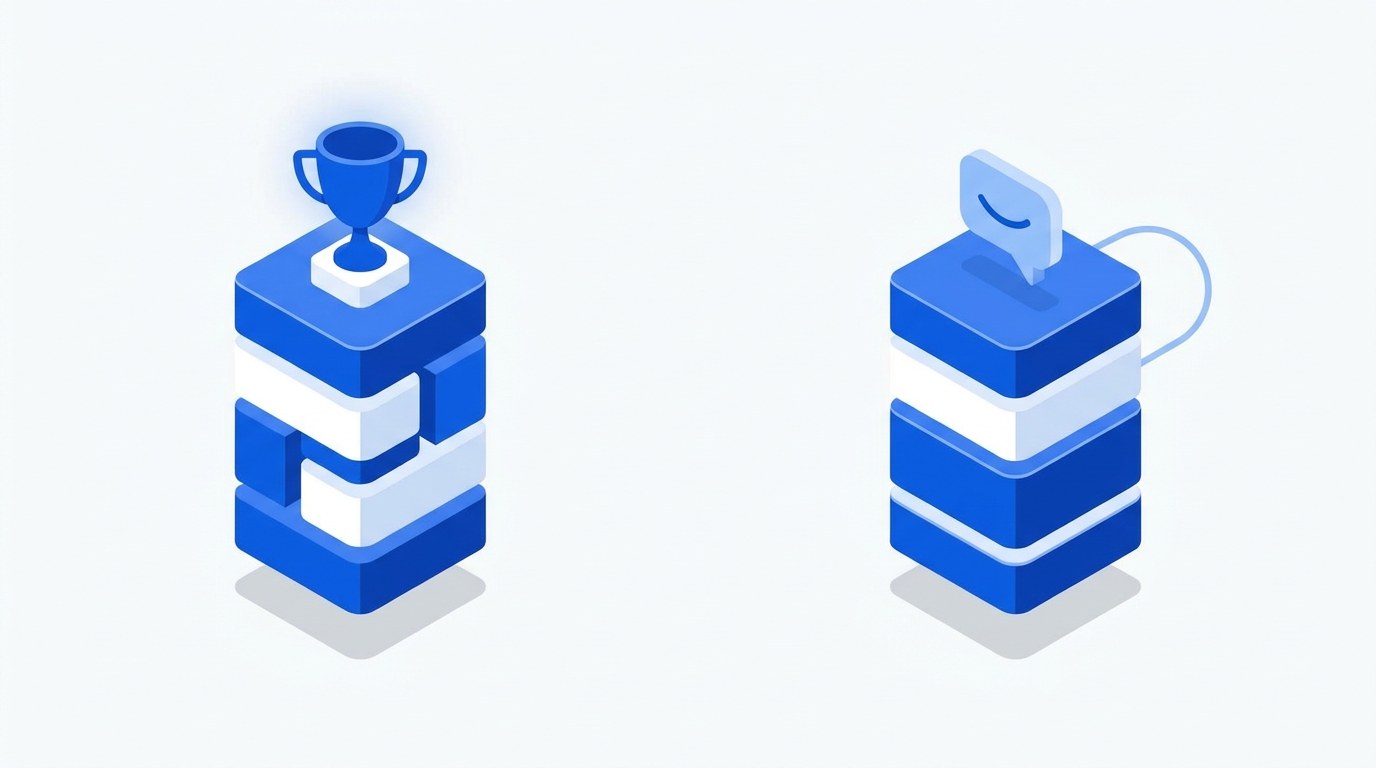
Even staying inside Google's ecosystem, the disconnect shows up. The Map Pack (the local three-pack with the map) and the AI Overview (the generative answer at the top) are produced by two different systems with two different selection logics. Map Pack favors proximity, GBP completeness, review velocity, and category match. AI Overview favors structured data, freshness, answer-shape, and source diversity.
A business with a strong GBP and weak website schema dominates the Map Pack and gets skipped by the AI Overview. A business with weak GBP and rich schema does the opposite. The businesses that win both have invested in both signal sets. Map Pack-only is a losing 2026 position because the AI Overview now sits above the Map Pack on most informational queries and absorbs the click before the user scrolls.
The full GBP optimization framework for AI search is in GBP optimization for AI search. The short version: GBP wins the map. Schema and answer-shape win the overview. You need both.
Schema Markup: The Hidden SEO Lever for AI
Schema markup was always the SEO lever everyone half-implemented and then forgot about. Generic LocalBusiness schema, maybe a Product or Article tag, and that was the entire schema strategy on most small business sites. In 2026, schema is no longer a nice-to-have for AI search. It is the single biggest controllable lever.
The reason is mechanical. AI engines extract answers, not pages. When ChatGPT or Google AI Overview is composing a synthesized answer, it pulls structured data preferentially because structured data is machine-readable, scoped, and unambiguous. A page with FAQPage schema gives the engine a clean question-answer pair it can drop directly into the synthesized response. A page without FAQPage schema forces the engine to do extraction work, which it sometimes skips entirely in favor of a competitor who made it easy.
The schema priorities for AI citation, in order: LocalBusiness with the correct industry subtype (Dentist, HVACBusiness, LegalService, MedicalBusiness, not generic LocalBusiness), FAQPage on every service page with 5-8 conversational Q&A pairs sourced from real People Also Ask data, HowTo schema on any how-to content, and Article schema on blog posts with author and datePublished fields. We get into the full implementation in the 7-thing AI search audit checklist.
Why "Comprehensive Services" Pages Hurt AI Citations
This is the part that breaks people who have done SEO for 10+ years. The traditional SEO playbook says build deep, comprehensive pages. Long-form, thorough, covering every angle. Google rewards that with rankings. AI engines penalize it with skipped citations.
The reason is selection logic. AI engines recommend pages that own ONE specific customer problem. A page titled "Our Services" that lists 12 different things you do owns nothing specific. Every query you might want to be cited for is a partial match. A page titled "Emergency Water Damage Restoration in Phoenix: Same-Day Response and Cost Breakdown" owns exactly one problem and gets cited cleanly for every query that touches it.
The fix is structural. Replace one mega-services page with 8-12 problem-owned pages. Each one targets a single specific customer problem with a question-shaped title, a direct answer in the first paragraph, FAQ schema below, and a concrete CTA. Google still ranks these well because they are deep enough to satisfy intent. AI engines cite them at 3-5x the rate of the mega-page because they can extract a clean answer.
This is also why content velocity matters more in 2026 than it did in 2020. You cannot own one problem per service line with a single page. You need one page per problem, and a service line typically has 8-15 problems. The full content strategy is in how long AI search optimization takes.
How to Win Both Channels at Once
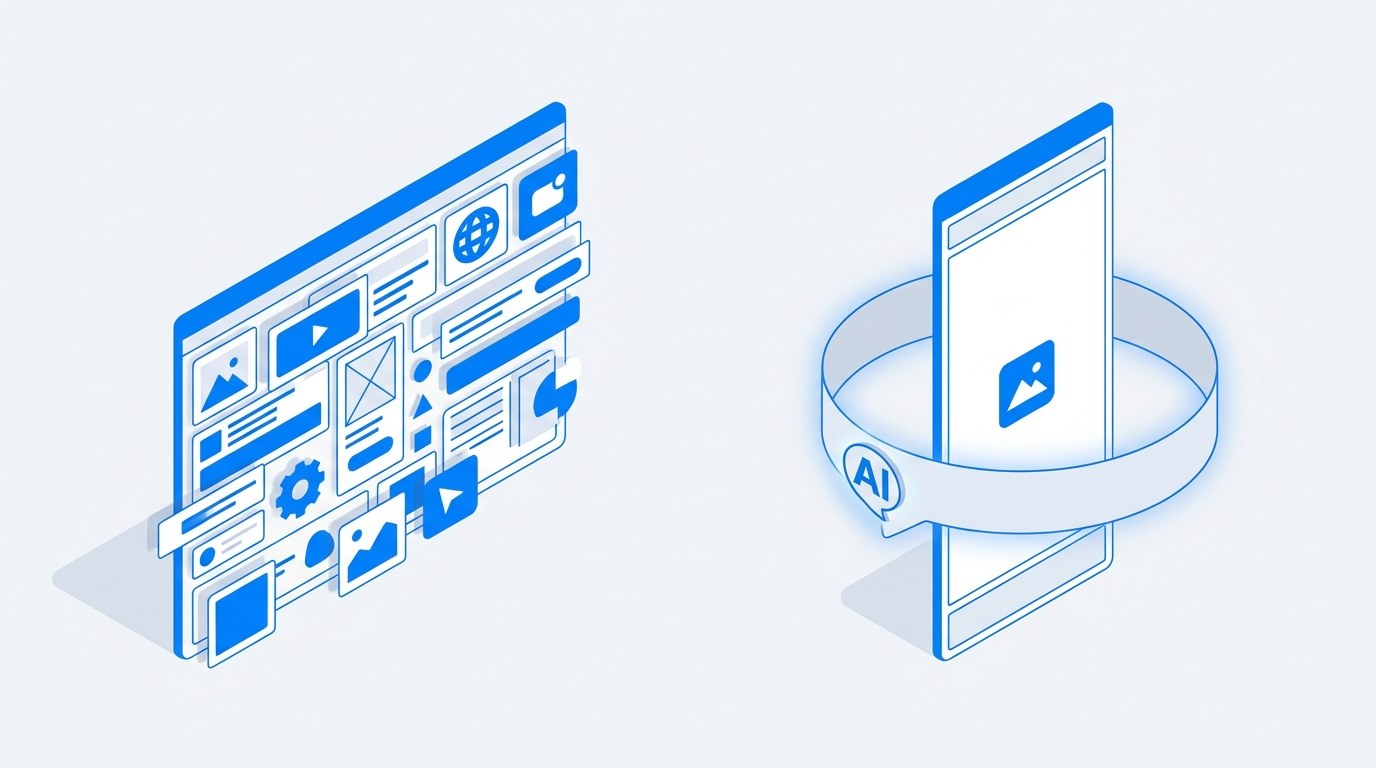
The good news is that the two channels are not in conflict. They reward different things, but the things they reward are stackable. A page can rank #1 on Google and get cited by ChatGPT in the same week. It just has to be built for both, not just for Google.
The dual-channel formula in five steps. (1) Pick one problem per page. Specific, named, customer-language. (2) Answer the problem in the first 100 words, directly and structurally. This is your AI citation anchor. (3) Build out the rest of the page to 1,200-2,000 words with sub-problems, related questions, and internal links. This is your Google ranking depth. (4) Ship FAQPage schema with 6-8 real People Also Ask questions and conversational answers. (5) Ship LocalBusiness schema with the correct industry subtype if it is a service page.
Outside the page, you stack the off-page signals that AI engines reward and Google does not penalize. Claimed and populated Foursquare, Bing Places, and Apple Maps listings. Industry-specific directory presence. NAP consistency across the citation network. Active review velocity on Google and Yelp. The full audit checklist that covers this in detail is in the 7-thing AI search audit. If you want to know whether the DIY route or an agency makes more sense for your situation, the DIY vs hire decision matrix walks through it honestly.
Curious where your Google rankings and AI citations actually diverge?
Free 30-minute call. We pull your current Google rankings for your top 10 queries, then run the same 10 queries live in ChatGPT, Perplexity, and the Google AI Overview. You see the gap in real numbers. No commitment.
Book Your Free AI Visibility AuditFrequently Asked Questions
Why does ranking #1 on Google not guarantee a ChatGPT citation?
Because they use different indexes. ChatGPT does not crawl Google. It pulls live web results from Bing search and layers them with curated third-party data sources like Foursquare for local recommendations. Your #1 Google ranking lives inside Google's index, behind Google's ranking signals. ChatGPT never sees that ranking. If your Bing presence is weak, your schema is generic, or your Foursquare listing is empty, ChatGPT recommends a competitor who is ranked #8 on Google but #2 on Bing and has a populated Foursquare entry. The signals overlap (backlinks, content quality, NAP consistency) but the index and the weighting differ.
Does Google AI Overview use the same ranking as the regular Google SERP?
No. AI Overviews use Google's index but a different selection model. The standard SERP ranks pages on link signals, on-page SEO, and user behavior. AI Overviews weigh structured data, freshness, source diversity, and answer-shape (whether the page directly answers the query in a citable paragraph) much more heavily. Pages ranked #1 organically frequently do not get cited in the AI Overview because they answer the query in a sprawling 3,000-word format that the AI cannot extract cleanly. Pages ranked #5-15 that contain a direct, structured answer with FAQ and HowTo schema often win the citation slot.
Which AI engines use which index?
Four engines, four indexes. ChatGPT uses Bing search plus curated third-party sources (Foursquare, Yelp, Wikipedia, Reddit). Perplexity uses its own curated index built on Common Crawl plus live web fetches via SerpAPI and Brave, with heavy reliance on Reddit and authoritative content sites. Claude (via web search) uses Brave search by default. Google AI Overviews use Google's index with a different ranking model than the standard SERP. None of them treat "ranks #1 on Google" as a citation signal directly.
Is SEO dead because of AI search?
No, and anyone saying that is wrong. SEO still produces traffic and still matters for the Google SERP, which still drives a meaningful chunk of local discovery. What changed is that "good SEO" is no longer sufficient. It is one of three required channels. You need the Google SERP (traditional SEO), the AI engines (citation optimization), and the Map Pack (GBP plus local citations). A business winning all three doubles or triples a business winning only Google. A business winning only Google is leaking 30-50% of its potential discovery to competitors who appear in ChatGPT and Perplexity.
What signals matter for AI citation that do not matter for Google ranking?
Five specific signals. (1) Foursquare presence and completeness, which feeds ChatGPT local recommendations heavily. (2) Bing search ranking, which most SEO tools ignore. (3) Structured data depth, specifically FAQPage, HowTo, and LocalBusiness with industry subtype. AI engines extract answers directly from these. (4) Answer-shape content, meaning pages that answer one question in one self-contained paragraph rather than burying answers in long content. (5) Third-party citation density on Wikipedia-adjacent sources, industry directories, and Reddit. These five signals overlap with traditional SEO at maybe 20%. The other 80% is parallel work that traditional SEO agencies do not do.
Why do comprehensive services pages hurt AI citations?
Because AI engines cite specificity, not breadth. A page titled "Services" that lists 12 things you do gets cited zero times because no query matches it cleanly. A page titled "Emergency Water Damage Restoration in Phoenix" that answers one specific question gets cited because it owns one problem. Google ranks comprehensive pages well because they accumulate backlinks and signal authority. AI engines pass them over because they cannot extract a citable answer. This is the single biggest mismatch between Google rankings and AI citations. Big "mega" service pages win Google and lose AI. Specific problem-owned pages lose Google traffic but win citations.
Can a page rank #50 on Google and still get cited by ChatGPT?
Yes, regularly. We see it weekly with client audits. A specific problem-owned page on a small local site with strong Foursquare and Bing signals plus FAQ schema gets cited in ChatGPT for a long-tail query while the page itself ranks #40-80 on Google for that same query. The page never gets organic clicks. It gets ChatGPT clicks instead. The lesson is that you cannot rely on Google ranking as a proxy for AI visibility. They are separate channels and you have to measure them separately.
What is the fastest way to fix the page-1-but-no-citation gap?
Three steps in order. (1) Audit Bing first. Search your top 10 keywords in Bing. If you are not in the top 5 there, that is your first fix, and it usually takes 14-21 days because Bing indexes faster than Google. (2) Claim and populate Foursquare. This single move shifts ChatGPT local citation rate by 5-15% in 3 weeks. (3) Add FAQPage and LocalBusiness schema with industry subtype to your top 5 service pages. This pulls in AI Overview citations within 2-4 weeks. The full audit framework is in the 7-things checklist. Most clients can self-execute steps 1 and 2 in a weekend. Step 3 usually needs a developer.
Stop optimizing for one channel and losing the other
Free 30-minute audit. We map your Google ranking, your Bing ranking, your Foursquare status, and your AI citation rate across ChatGPT, Perplexity, and Claude in one sitting. You leave with the exact gaps that are costing you discovery.
Book the Free Audit
About the author
Matthew Johnson is the founder of Pleiades Consultancy. He previously scaled his own marketing agency to multiple six figures before serving as CMO of an Amazon agency, where the client base tripled from 15 to 45 active clients during his tenure. He worked with some of the largest names in e-commerce, including Ridge Wallet, HexClad, BK Beauty, The Woobles, Walkize, Lonely Planet, and Obvi. He now works with local businesses to maximize their client acquisition and visibility through AI search with ChatGPT, Claude, Gemini, Perplexity, and Bing Copilot.