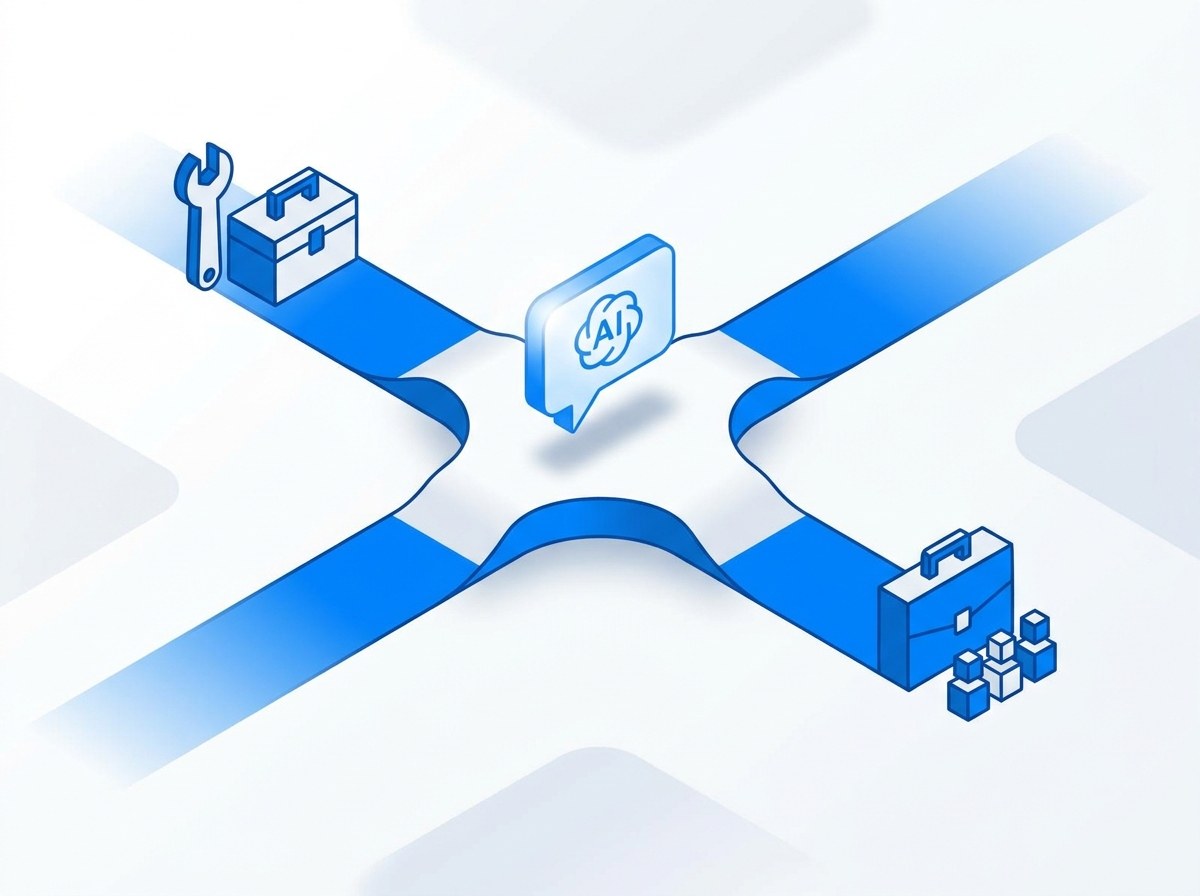
TL;DR Decision Rule
- Under $500k revenue: DIY foundation. $0 in software. 3-4 hours of your time once.
- $500k-$1M revenue: Hybrid. DIY foundation + hire for content + monitoring.
- Over $1M revenue: Hire. Marginal citation gain per dollar is higher than DIY can produce.
- Multi-location: Hire regardless of revenue tier.
- Competitive vertical (legal, restoration, cosmetic dental): Hire regardless.
- DIY-with-tools middle ground: Localrank.so $79/mo + $200-$400/mo content writer.
The 4-Hour DIY Foundation Playbook
If you are under $500k in revenue and one person handles your marketing, this is the work to do this weekend. Cost: $0 in software. Time: 3-4 hours total. Outcome: 8-15% AI citation rate inside 60 days, which is the foundation 95% of local businesses are missing.
Step 1: Claim Foursquare (30-60 minutes)
Foursquare feeds 70% of the data ChatGPT uses for local recommendations. Most local businesses do not know this. The full step-by-step lives in the Foursquare claim walkthrough. The short version: search Foursquare for your business, claim it, verify ownership, fill out every field including categories, hours, services, and photos. This single step is the highest-ROI hour you can spend on AI search optimization.
Step 2: Set up Bing Places (30 minutes)
Bing Places feeds Google AI Overviews supplemental data and Microsoft Copilot recommendations. Bing Places lets you import directly from your Google Business Profile, so the actual entry takes 5 minutes plus 20 minutes of verification. This is mandatory for any business in any vertical, no exceptions.
Step 3: Apple Maps Connect (30 minutes)
Apple Maps powers Siri, Apple Intelligence, and the iPhone-default discovery flow. The setup is a sign-up, business verification, and field-by-field entry. Easy, but most local businesses skip it because the iPhone-only nature feels limited. It is not. Apple Intelligence is now baked into iMessage and Safari, and citations from Apple Maps show up in Apple Intelligence answers.
Step 4: LocalBusiness schema on your homepage (1-2 hours)
Use schema.dev or technicalseo.com's schema generator. Pick the correct industry subtype (Dentist, HVACBusiness, LegalService, etc), fill in NAP, hours, services, and area served. Add the JSON-LD block to your homepage and your service pages. The full breakdown lives in the schema markup guide. If you use WordPress, plugins like Rank Math or Yoast handle this in 10 minutes. Webflow and Squarespace have native schema fields. Custom builds need a developer.
The 6 DIY Failure Modes (Month 3)
The foundation work is genuinely DIY-able. Everything past the foundation is where solo operators run into walls. Here are the six failure modes we see most often, ranked by frequency.
- Schema markup mistakes that hurt rankings. JSON-LD syntax errors, wrong @type values, missing required fields. Bad schema is worse than no schema because Google flags it as deceptive markup. Solo operators who do not validate with schema.org's validator after every change ship broken markup.
- Citation network gaps that compound. Foursquare, Bing, and Apple Maps are Tier 1. The 8-12 industry-specific directories (Healthgrades for dental, Avvo for legal, Angi for home services) are Tier 2. Solo operators almost always cover Tier 1 and miss Tier 2. The compounding effect over 6 months is significant.
- Content-stage confusion. Writing "What is a root canal" (informational) when AI citations come from "Best dentists in Phoenix for root canals" (decision-stage). The content distinction is covered in the AI search vs traditional SEO comparison. Owners default to informational content because it is easier to write.
- Measurement blindness. No idea what your citation rate is across the major engines. The citation rate tracking guide covers this. Without measurement, you cannot tell if your work is moving the needle or not.
- False confidence at 5% citation rate. The foundation work moves you from 0% to 8-15%. That feels like a big win because it is your first real lift. Then you stop. The next 25-50 percentage points of citation rate require sustained content production and citation network depth that solo operators almost never sustain.
- Capacity exhaustion at month 3. Real DIY past the foundation requires 4-6 hours per month of focused work. Most owners run a business and have 2 hours of marketing time per week, total. By month 3, AI search work falls off the calendar.
The DIY vs Hire Decision Matrix
The Hybrid Path Most Owners Miss
The full agency vs full DIY framing skips the most economically rational option for businesses in the $500k-$1M revenue range. Here is the hybrid stack that produces 70% of the agency outcome at 30-40% of the cost.
The hybrid stack ($279-$879/month)
- Localrank.so ($79/month). Citation rate tracking across ChatGPT, Perplexity, Claude, Google AIO. Tells you exactly which queries you appear on and which you do not.
- Whitespark Local Citation Finder ($25-$50/month, optional). Industry-specific directory discovery. Hands you the Tier 2 citation network without you needing to research it.
- Freelance content writer ($200-$400/month). 1-2 decision-stage posts per month. Hire on Contra, Upwork, or Workello. Brief them with the comparison framework from the agency comparison post.
- Your time (2 hours/month). Foundation maintenance, NAP audits, content review, monthly Localrank.so dashboard check.
Why this works: the agency premium is 60% strategy and project management, 40% execution. If you can manage the strategy and project management yourself (and at $500k-$1M revenue, you probably can), you only pay for the execution that requires specialist skill. The trade-off: you carry the management overhead, the strategic decisions, and the responsibility when things stall.
When You Should Just Hire (Five Triggers)
The honest hire criteria. If any two of these apply, the math points at hiring an agency over DIY or hybrid.
- Revenue over $1M. A $1,500/mo retainer is under 1% of revenue. ROI math becomes obvious.
- Multi-location. The agency cost gets distributed across locations. A 3-location practice at $2,500/mo is paying $833/location, but the work scales sub-linearly because schema, content, and citation contacts get reused.
- High-competition vertical. Legal, restoration, cosmetic dental in major metros. Solo DIY rarely produces meaningful lift in these niches because top players are already running paid AI search agencies.
- Less than 2 hours/month available. Owners running clinical or operational roles full time. The hybrid path requires 2+ hours/month of management time. If that does not exist, hire.
- You already DIY-ed the foundation and stalled. If you ran the 4-hour DIY foundation 60-90 days ago and your citation rate is stuck at 10-15%, hiring an agency to handle phases 3-5 is more efficient than doubling your own time investment.
If you are evaluating agencies, the comparison breakdown across Pleiades, Sterling Sky, Whitespark, Boring Local SEO, and Localrank.so lives in the 2026 agency comparison post. Pricing per tier and what is included at each is in the cost guide. Realistic 30/60/90 day expectations live in the timelines pillar.
Not sure if you should DIY or hire?
Free 15-minute call. We test your AI visibility live, look at your revenue, vertical, and capacity, and tell you honestly whether to DIY, go hybrid, or hire. Even if the answer is "not us."
Book a CallFrequently Asked Questions: DIY vs Hire
Should I DIY AI search optimization or hire an agency?
Use revenue and competition density as your decision rule. Under $500k annual revenue with one person responsible for marketing: DIY the foundation work. The 4-hour Foursquare, Bing Places, Apple Maps, and basic schema setup gets you 60% of the AI citation lift at $0 in software cost. $500k-$1M revenue: hybrid. DIY foundation + hire for content production and monitoring. Over $1M revenue, multi-location, or in competitive verticals (legal, medical, restoration): hire an agency. The marginal AI citation gained per dollar at $1,500-$2,500 monthly is significantly higher than what DIY can produce because of citation network depth and ongoing decision-stage content.
What can I actually do myself in 4 hours for free?
Four steps. (1) Claim your Foursquare listing (30-60 minutes). Foursquare feeds 70% of ChatGPT's local recommendation data. This single action moves the needle more than any other free input. (2) Set up Bing Places (30 minutes). Direct feed into Google AI Overviews supplemental data. (3) Add Apple Maps Connect (30 minutes). Required for Siri and Apple Intelligence. (4) Add LocalBusiness schema to your homepage (1-2 hours with a developer or schema.dev generator). That foundation alone takes a typical local business from 0% AI citation rate to 8-15% inside 60 days, completely free.
When does DIY stop scaling?
Six failure modes show up around month 3 of DIY. (1) Schema markup mistakes that hurt rankings instead of helping (wrong @type, missing required fields, JSON-LD syntax errors). (2) Citation network gaps (you covered the Tier 1 directories but missed the 8-12 industry-specific ones that compound over months). (3) Content-stage confusion (publishing informational blog posts when AI citations come from decision-stage content like comparison and pricing pages). (4) Measurement blindness (no idea what your citation rate is across ChatGPT, Perplexity, Claude, Google AIO). (5) False confidence at 5% citation rate (you got the easy lift and stopped). (6) Capacity exhaustion (the work needs 4-6 hours per month and you are running a business).
What is the hybrid path between DIY and full agency?
Tools-only DIY-with-tools is the underrated middle. Subscribe to Localrank.so at $79/month for citation rate tracking across ChatGPT, Perplexity, and Google AI Overviews. Use the dashboard to see exactly which queries you appear on and which you do not. That data tells you where to focus your own optimization. Add a one-off content writer at $200-$400 per decision-stage post for 1-2 pieces per month. Total monthly cost: $279-$879. You get most of the agency outcome at half the price, but you carry the management overhead and the strategic decisions yourself.
What is the agency advantage that DIY cannot replicate?
Three things. First, citation network depth. Agencies maintain relationships with niche directories that take months for a solo operator to discover and earn placement on. Second, decision-stage content velocity. Producing 2 high-quality comparison or pricing posts per month, every month, for 12 months is the work that builds the AI citation moat, and most owners cannot sustain that pace alongside running their business. Third, monitoring infrastructure. Tracking citation rate across 4 AI engines on 50+ query variations weekly is full-time work, not a side task.
How much do agencies cost vs DIY?
DIY foundation: $0 software, 3-4 hours of your time once. DIY-with-tools: $79-$200 monthly in software (Localrank.so, Whitespark Local Citation Finder, schema generator). Boutique agency, single location: $800-$1,200 monthly. Mid-tier multi-location: $1,500-$2,500 monthly. Enterprise specialty: $2,500-$3,000+ monthly. The full pricing breakdown lives in the <Link>cost guide</Link>. The decision is not really about price, it is about whether your time is more valuable spent on AI search or on running your business.
Can I switch from DIY to hiring later?
Yes, and it is the smart sequence for most local businesses doing under $1M in revenue. Start with the 4-hour DIY foundation. Run it for 60-90 days. If you see citation rate move from 0% to 8-15%, you have proven AI search works for your vertical. Now you can hire an agency with informed expectations and a working baseline. The agency's job becomes scaling what already works rather than convincing you it works. Most agencies, including Pleiades, prefer this sequence because the engagement starts with momentum instead of skepticism.
Are there any DIY shortcuts that backfire?
Three big ones. (1) Buying citation packages off Fiverr. Cheap directory submissions create inconsistent NAP records that take months to clean up and actively hurt your AI citation rate. (2) Using AI to generate decision-stage content without editing. ChatGPT-written comparison posts that all sound the same get filtered out by AI engines that detect synthetic content patterns. The content has to read like a human wrote it, with specific local detail. (3) Setting up Foursquare with a different business name or phone number than your GBP. Inconsistency at the data source level is worse than not being on Foursquare at all.
What revenue level should I cross before hiring?
$500k annual revenue is the threshold where the math starts working in favor of hiring. Below that, an $800-$1,500 monthly retainer is 2-4% of revenue, which is too high a marketing spend ratio for most service businesses. Above $500k, a $1,500 retainer is under 1% of revenue and the AI search lift typically generates 5-15x ROI over 12 months in our audit data. Multi-location businesses cross the threshold faster because the agency cost gets distributed across locations. A 3-location practice doing $750k per location is a strong fit at the $2,500 mid-tier.
Is there a vertical where DIY does not work at all?
Three verticals where DIY almost never produces meaningful results: personal injury law, water/fire/mold restoration, and cosmetic dental in major metros. The common pattern is high competitor density, high AI search investment from existing top players, and content-heavy decision-stage queries that require sustained production cadence. In these verticals, going from 0% to 5% citation rate takes 6+ months of solo work, vs 60 days with an agency. The opportunity cost of DIY in these niches almost always exceeds the agency retainer.
Get an honest read on whether to DIY or hire
We will look at your revenue, vertical, and current AI visibility, and tell you what your highest-ROI move actually is. No pitch if hiring is not the right answer for you.
Book the Free Audit →We also cover this in more detail in our guide to Is AI Search Optimization Different From SEO, and Do I Need a Separate Tool for It: How to Decide (2026 Guide).
We also cover this in more detail in our guide to Who Should I Hire for an AI Search Content Audit: How to Decide (2026 Guide).
We also cover this in more detail in our guide to Should Your Practice Hire an AI Search Agency or Wait Another 6 Months?.
There is a fuller walkthrough in Which Schema Types Actually Move AI Citations for Local Businesses.
Worth reading next: What an AI Search Agency Should Put in Writing Before You Pay: The One-Page Scope.
We go further into this in Burned by Three Marketing Agencies? How to Set Up the Fourth So You Can Fire It With Evidence.
For the longer version, see Your Agency Says Give It 90 Days. What Should Be Visible by Day 30 So You Know It Is Not a Stall.
For the longer version, see Will AI Search Send Price Shoppers or Real Jobs? What the Lead Log Shows by Trade.
For the longer version, see Adding AI Search to Your Current SEO Agency: How Two Vendors Split the Work Without Breaking Anything.
For the longer version, see How to Check an AI Search Agency's Case Studies Yourself in 10 Minutes.
For the longer version, see Is Your SEO Agency Doing Anything? Three Questions They Should Answer in Ten Minutes.
About the author
Matthew Johnson is the founder of Pleiades Consultancy. He previously scaled his own marketing agency to multiple six figures before serving as CMO of an Amazon agency, where the client base tripled from 15 to 45 active clients during his tenure. He worked with some of the largest names in e-commerce, including Ridge Wallet, HexClad, BK Beauty, The Woobles, Walkize, Lonely Planet, and Obvi. He now works with local businesses to maximize their client acquisition and visibility through AI search with ChatGPT, Claude, Gemini, Perplexity, and Bing Copilot.