Key Takeaways
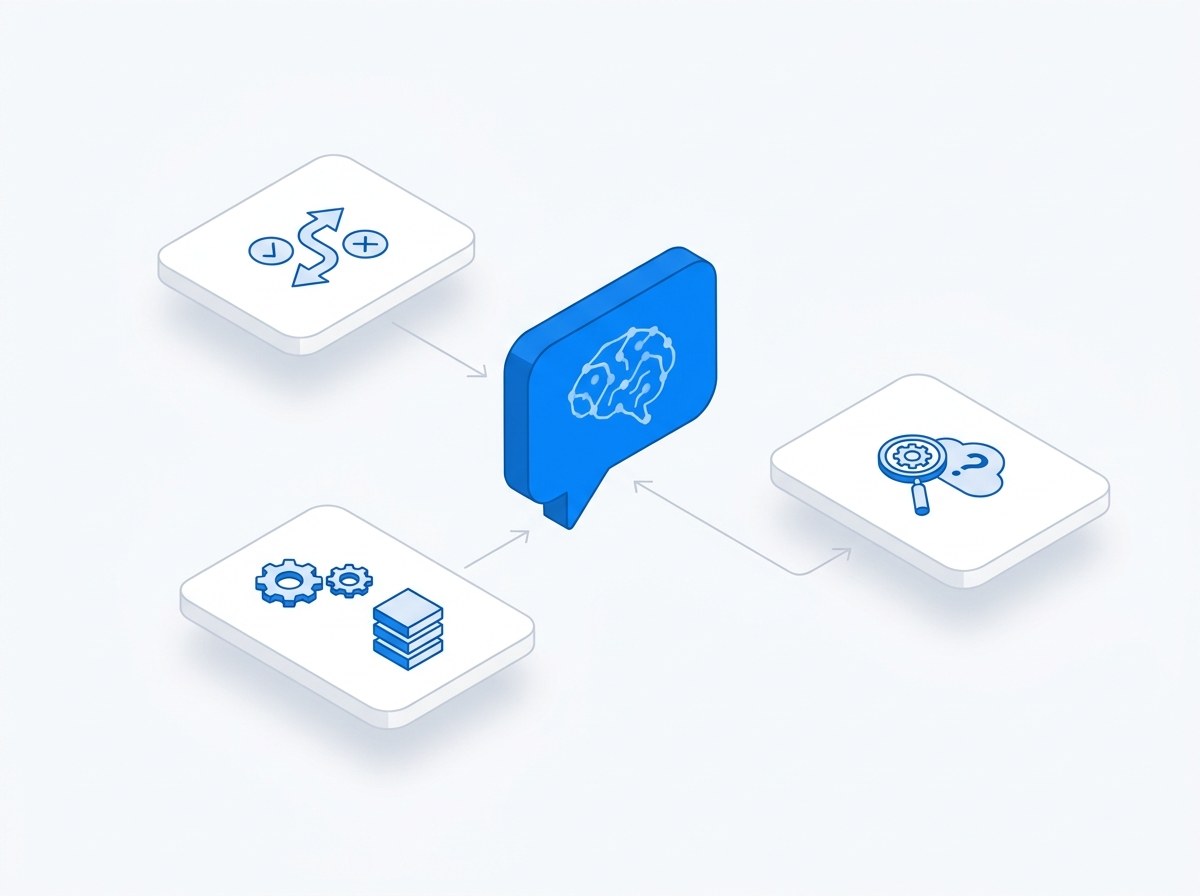
- AI search optimization shares roughly 70% of its foundation with SEO. Clean citations, schema, and a claimed Google Business Profile help both. The 30% that differs is the goal: a citation inside an answer, not a ranked link and a click.
- Most local businesses do not need a separate AI tool. Your existing SEO stack plus free manual query checks covers it. Dedicated citation trackers run $50 to $200 per month and only pay off at multi-location or agency scale.
- Page-1 Google rankings do not guarantee AI citations. ChatGPT leans on Foursquare and citation networks Google does not weight, so strong SEO gets you about halfway.
- There are three honest paths: keep your SEO and extend the brief, add a tracking tool, or hire for per-platform depth. Which one fits depends on your time, your locations, and your buyers.
- You can baseline everything in one afternoon for $0 by claiming off-site profiles and running your ten main buyer questions through ChatGPT, Perplexity, Claude, and Google.
The Short Answer
Yes, AI search optimization is different from SEO. No, you almost certainly do not need to buy a separate tool for it. Both of those are true at once, and the confusion in the market comes from people picking one and pretending the other does not exist.
Here is the frame that clears it up. Traditional SEO was built to help Google decide which web page best matches a keyword, then rank it so someone clicks. AI search optimization is built to get your business named inside an answer, often with no click at all. The plumbing overlaps heavily. The goal does not.
If you already do SEO well, you are maybe halfway to strong AI visibility for free. The other half is specific work that most SEO checklists from 2020 never mention. That gap is what this guide is about, and it walks you to a clear decision by the end. If you want the full side by side, we broke it down in AI search vs traditional SEO.
What Actually Differs
Strip out the hype and there are three real differences. Everything else is shared foundation.
The goal changed. SEO wanted a ranked link and a click. AI search wants a citation inside a generated answer. Sometimes the buyer never visits your site at all. They ask ChatGPT for a good dentist in their area, get three names, and call one. You either got named or you did not.
Second, the data sources changed. Google AI Overviews pulls from your Google Business Profile, reviews, and high-ranking pages. ChatGPT leans heavily on Foursquare and citation networks. Perplexity pulls broad web context. Claude weights authoritative directories and association memberships. These do not share one layer. That is exactly why a business can dominate Google and be invisible in ChatGPT, which we unpack in why your page-1 Google rankings do not get you cited by AI.
The content that wins changed. AI engines pull answers, not keywords. Comparison pages, decision-stage guides, and clean structured responses to the exact questions buyers type get cited far more than a keyword-stuffed service page. If your competitor keeps showing up in ChatGPT and you do not, the content structure is usually the reason, which we covered in my competitor shows up in ChatGPT but I do not.
What did not change: NAP consistency, schema markup, a claimed and complete profile, real reviews, and authoritative content. That is the shared 70%. Anyone telling you to throw out your SEO and start over is selling you a second bill for work you already own.
Do You Need a Separate Tool?
Short version: probably not a new one. Your existing stack already does most of the job. Here is what each layer covers.
What you already have. Google Search Console is free and shows you what Google indexes. A suite like Ahrefs or Semrush ($100 to $250 per month) handles keywords, backlinks, and content gaps. That foundation feeds both SEO and AI visibility. You do not replace it.
The one thing your SEO tool does not do. It cannot tell you whether ChatGPT, Perplexity, Claude, or Google AI Overviews actually name your business. That is the genuinely new measurement problem. You solve it one of two ways. Manually, for $0, by running your top buyer queries by hand each week and logging where you appear. Or with a dedicated citation tracker at $50 to $200 per month that automates it. We go deeper on the measurement setup in how to track if AI engines are citing your business.
The rule of thumb: single location, do it manually and keep the $50 to $200 in your pocket. Managing multiple locations or clients, buy the tool because manual checking stops scaling around the third location.
Which Path Fits You
Three honest paths. Pick by your time, your number of locations, and where your buyers actually search.
Extend your existing SEO (no new tool) if: you run a single location, you already pay for SEO or do it yourself, and you have a few hours a month to run manual query checks. Add Foursquare, Bing Places, and Apple Maps, write one comparison and one decision-stage page for your top service, and track citations by hand. This is the right call for the majority of local businesses. You are extending a budget you already have, not starting a second one.
Add a tracking tool if: you manage two or more locations, or you are an agency, and manual checking is eating hours you do not have. The $50 to $200 per month buys back time and gives you per-platform trend data you can show a client or a partner. The foundation work is the same. You are just automating the scoreboard.
Hire for per-platform depth if: you have no time to produce comparison content weekly, or your vertical is competitive enough that the citation network and off-site data work is a real job. A retainer covers Foursquare maintenance, ongoing decision-stage content, and per-platform reporting. Ask the seven questions in how to choose between AI search optimization agencies before you sign anything.
Do none of the above (yet) if: you have not run a single baseline query. Do that first. You cannot decide between three paths when you do not know whether you have a foundation problem or a content problem. One afternoon of checking answers this for you.
What It Costs
The numbers, plainly, so you can budget without a sales call.
DIY foundation: $0 in new software plus 4 to 6 hours. Claiming profiles, adding schema, fixing NAP, and running baseline queries costs nothing but time.
DIY plus tooling: $50 to $250 per month. Add a citation tracker on top of your existing SEO suite. Right for multi-location owners who want automated per-platform data.
Full-service retainer: covers off-site feeds, ongoing comparison content, and per-platform reporting, and overlaps heavily with a traditional local SEO retainer. You're not paying two full bills because the foundation is shared. For a market reference, Ahrefs' survey of 439 SEO providers puts local SEO at $1,557 a month on average ($1,819 from agencies, $1,150 from freelancers). That's a local SEO average, not an AI-search figure. For the full cost picture, see how much an AI search actually costs in 2026.
For a single-location business on a full-service retainer, a citation rate of 30 to 50% across the platforms your buyers use tends to produce 20 to 35 inbound inquiries per month attributable to AI. If a customer is worth $3,000 to $15,000 to you over their lifetime, that math works out quickly, though vertical matters enormously.

Your First 72 Hours
Day 1 (90 minutes): Claim Foursquare, Bing Places, and Apple Maps. Confirm your name, address, and phone match everywhere. Add LocalBusiness schema to your site. This is the shared foundation that feeds every platform.
Day 2 (60 minutes): Audit your content. Do you have a single comparison or decision-stage page answering the exact question a buyer types? If not, outline one for your top service. This is the AI-specific 30% that most SEO plans skip.
Day 3 (60 minutes): Run your ten most important buyer questions through ChatGPT, Perplexity, Claude, and Google. Log where you appear and where you do not. That baseline tells you whether your gap is foundation or content, and which of the three paths above is yours.
After 72 hours you will know more than most owners paying a retainer without ever checking the answers. If the audit shows you are invisible on the platforms your buyers use and you do not have time to fix it, that is exactly when hiring makes sense.
Want us to run your baseline and tell you the honest gap?
We will show you where you appear across ChatGPT, Perplexity, Claude, and Google AI Overviews, and whether your problem is foundation or content.
Book a discovery callFrequently Asked Questions
Is AI search optimization actually different from SEO, or just rebranding?
It is about 70% the same foundation with a distinct 30% on top. The overlap is real. Clean citations, schema markup, a claimed Google Business Profile, and authoritative content help you rank on Google and get cited by ChatGPT. The 30% that differs is the goal and the surface. Traditional SEO chases a ranked link and a click. AI search chases a citation inside an answer, where there may be no click at all. That means comparison content, decision-stage pages, and off-site data feeds like Foursquare and Bing Places carry more weight than they did in 2020. So it is not a rebrand, but anyone selling it as a totally separate discipline is overselling.
Do I need to buy a separate AI search tool on top of my SEO software?
For most local businesses, no. Your existing SEO stack (Google Search Console is free, and a suite like Ahrefs or Semrush runs $100 to $250 per month) covers the foundation. What you add is a citation tracker to check whether ChatGPT, Perplexity, Claude, and Google AI Overviews actually name you. Dedicated AI visibility tools run $50 to $200 per month, but you can do a manual version for $0 by running your top queries by hand each week. Buy a separate tool only when you are managing several locations or clients and manual checking eats too many hours.
How much does AI search optimization cost compared to regular SEO?
The two overlap heavily, because the foundation work is shared. A full AI search optimization retainer adds comparison content, off-site data feeds, and per-platform citation tracking on top of that foundation, so you're not paying twice. For a market reference, Ahrefs' survey of 439 SEO providers puts local SEO at $1,557 a month on average, $1,819 from agencies and $1,150 from freelancers (ahrefs.com/blog/seo-pricing). That's a local SEO figure, not an AI-search one. DIY foundation is $0 in software beyond your existing tools plus 4 to 6 hours of setup. Tooling adds $50 to $250 per month if you want automated tracking. The honest read: if you already pay for SEO, AI search is an extension of that budget, not a second full bill.
Will my existing SEO agency handle AI search, or do I need a specialist?
Ask them three things. Do they measure citation rate per platform (ChatGPT, Perplexity, Claude, Google AI Overviews)? Do they produce comparison and decision-stage content, and can they show three examples? Do they manage Foursquare, Bing Places, and Apple Maps in-house? If they answer all three clearly, keep them. If they say AI search is the same as what they already do and change nothing, you need either a new brief or a specialist. Most competent local SEO agencies can extend into AI search. The ones that cannot are the ones treating a citation and a ranked link as the same outcome.
Can I just keep doing SEO and get cited by AI for free?
Partly. Strong SEO fundamentals do bleed into AI citations because the engines pull from the same web. But page-1 Google rankings do not guarantee citations. We see businesses ranking well on Google that ChatGPT never names, because ChatGPT leans on Foursquare and citation networks Google does not weight. So doing SEO gets you maybe halfway. The other half is the AI-specific work: comparison content, off-site data feeds, and structured answers to the exact questions buyers type into an assistant. Free overlap is real. Full coverage is not free.
Which platforms do I actually need to worry about?
Four. ChatGPT has by far the most users, so it is the priority. Google AI Overviews sits inside search results and pulls from your Google Business Profile and reviews. Perplexity at roughly 12% matters for research-heavy, higher-intent buyers. Claude at roughly 10% weights authoritative sources and directory listings. They do not share one data layer. A business strong on Google can be invisible on ChatGPT. So you do not pick one. You cover the foundation for all four, then add depth where your buyers actually are, which for most local trades means ChatGPT and Google AI Overviews first.
How long before I know if the AI-specific work paid off?
Baseline your queries on day one, then recheck at 30, 60, and 90 days. Foundation fixes like Foursquare, schema, and NAP consistency can shift citations in 2 to 6 weeks. Comparison and decision-stage content usually takes 6 to 12 weeks to get indexed, trusted, and pulled into answers. If nothing moves by 90 days on the platforms your buyers use, something is wrong with the execution, not the timeline. Track citation rate per platform, not just Google rankings, or you will measure the wrong thing and conclude it does not work when you simply never watched the right surface.
What is the cheapest way to start without committing to anything?
Spend one afternoon and $0. Claim Foursquare, Bing Places, and Apple Maps. Confirm your name, address, and phone match everywhere. Add LocalBusiness schema to your site. Then run your ten most important buyer questions through ChatGPT, Perplexity, Claude, and Google. Write down where you appear and where you do not. That single audit tells you whether you have a foundation problem or a content problem. From there, the decision to hire, buy a tool, or keep DIYing gets obvious. You have spent nothing and you now know more than most owners who pay an agency every month without checking the answers.
Stop guessing whether AI names your business
Whether you extend your SEO, add a tool, or hire, it starts with knowing your real per-platform citation rate. We will map it with you.
Book your AI visibility auditWe also cover this in more detail in our guide to Who Should I Hire for an AI Search Content Audit: How to Decide (2026 Guide).
There is a fuller walkthrough in Do You Need a New Website to Show Up in AI Search? Keep, Rebuild, or Take Back Control.
Worth reading next: AI SEO for Plumbers: What It Involves and Whether You Need It Yet.

About the author
Matthew Johnson is the founder of Pleiades Consultancy. He previously scaled his own marketing agency to multiple six figures before serving as CMO of an Amazon agency, where the client base tripled from 15 to 45 active clients during his tenure. He worked with some of the largest names in e-commerce, including Ridge Wallet, HexClad, BK Beauty, The Woobles, Walkize, Lonely Planet, and Obvi. He now works with local businesses to maximize their client acquisition and visibility through AI search with ChatGPT, Claude, Gemini, Perplexity, and Bing Copilot.