TL;DR
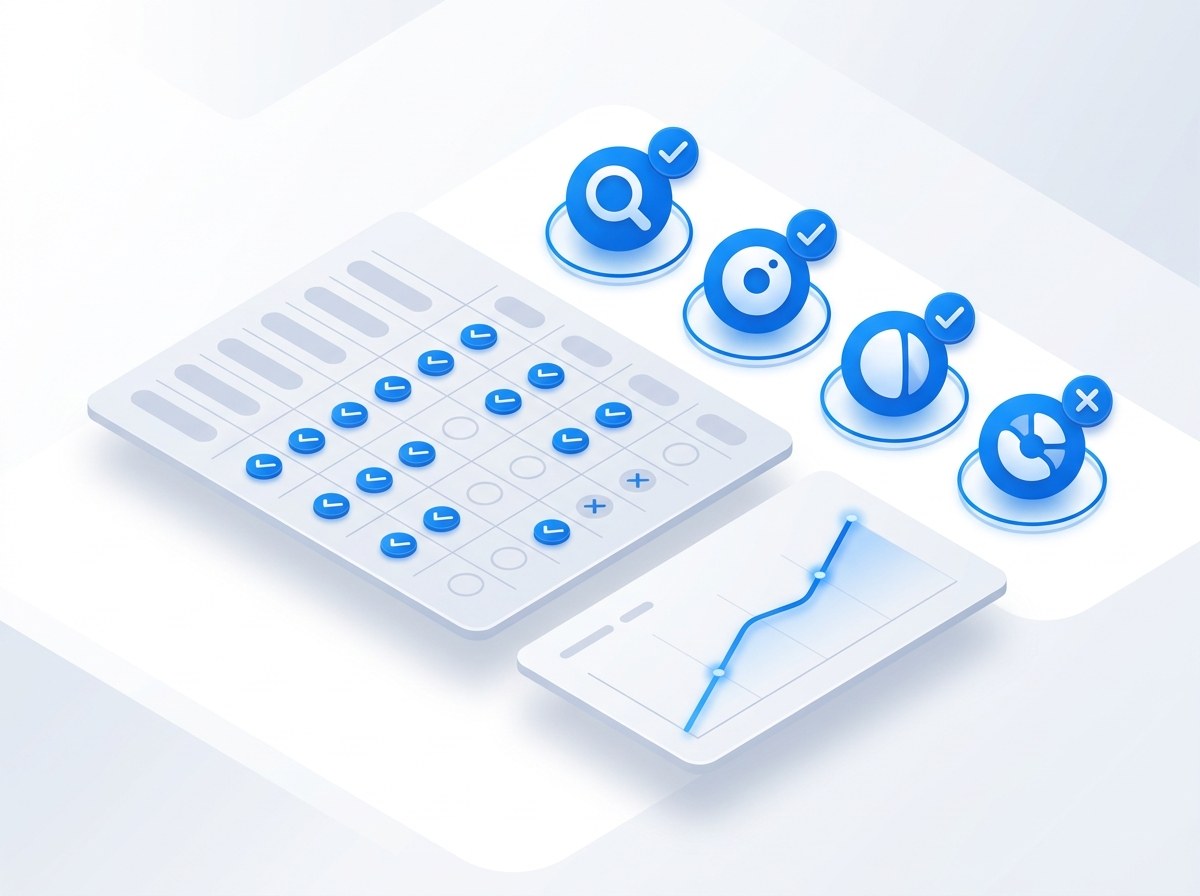
- Track 4 engines, weekly. Run the same query set across ChatGPT, Perplexity, Gemini, and Google AI Overviews every Monday. Pick a day and stick to it.
- Lock a 15-query test set in week 1. Five buying-intent, three problem-stage, three comparison, two decision-stage. Do not edit it once it is live or the trend line breaks.
- Manual prompting is free and fine. Incognito session, paste each query, screenshot, log cited/mentioned/absent in a Sheet. 30 to 45 minutes per week.
- Paid tools only past a certain size. Profound.so for agencies, OtterlyAI for mid-market, BrightLocal for single-location bundles. Everything else is a 3-month-old wrapper.
- Score citation vs mention separately. Absent then mentioned then cited is the real progression. Dashboards that collapse them into one visibility number hide the signal that produces inquiries.
The Short Answer: You Track 4 Platforms, Weekly, with a Fixed Question Set
Here is the entire system in one paragraph. Build a fixed set of 10-15 buying-intent queries. Run that same set, verbatim, every Monday morning across ChatGPT, Perplexity, Gemini, and Google AI Overviews. Log whether your business was cited, mentioned, or absent on each one. Track the 4-engine breakdown weekly. After 8 weeks you have a trend line that tells you exactly which platforms are working and which are not.
That is it. The rest of this post explains how to build the question set, the free vs paid tooling, and the reporting format that does not waste your time.
The 4 things you track weekly: (1) citation rate per engine, (2) mention rate per engine, (3) queries that moved from absent to mentioned or mentioned to cited, (4) queries where competitors got cited and you did not. Everything else is noise.
Building Your Test Question Set (the Most Important Step)
The test question set is the single most important piece of citation tracking. A bad question set produces useless data forever. A good question set tells you exactly what to fix.
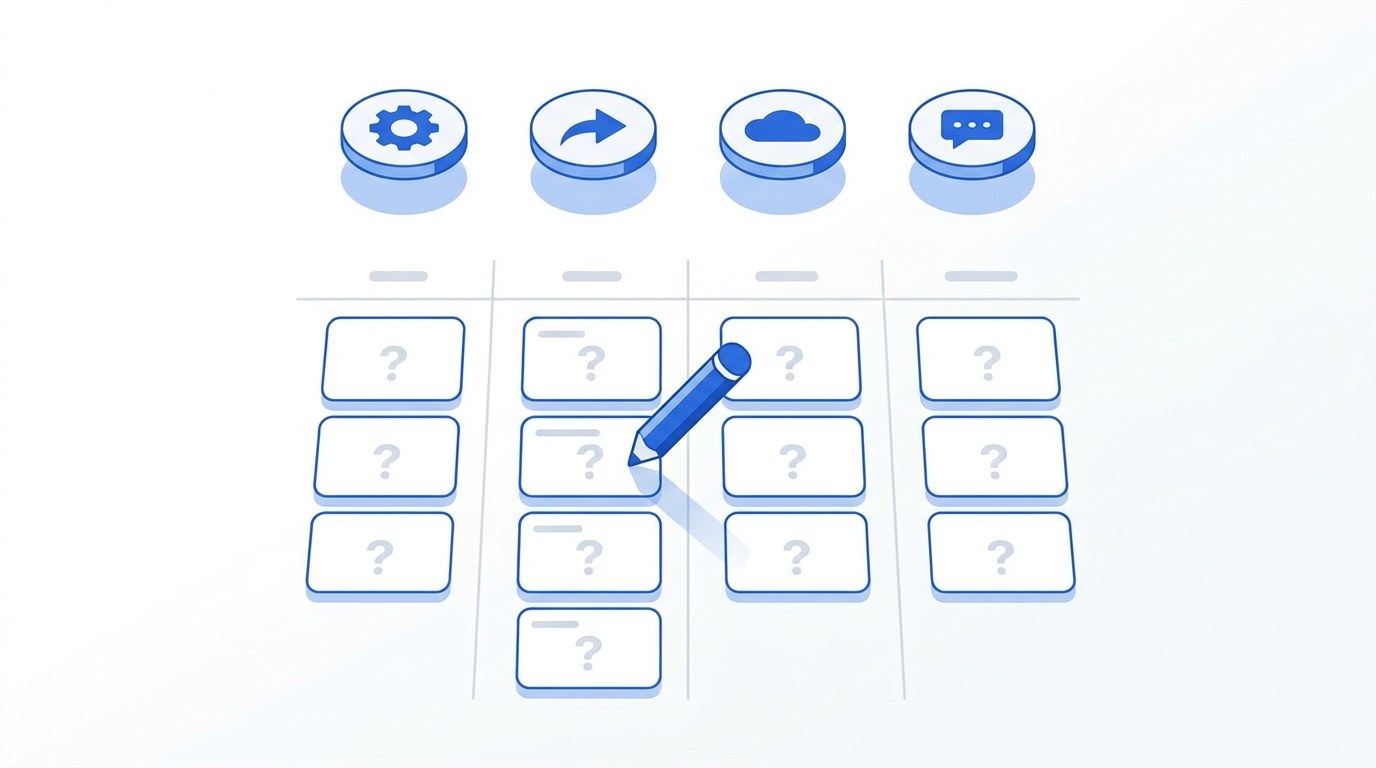
Build 10-15 queries across four categories. Five buying-intent queries: "best [service] in [city]", "[service] near me" (use a VPN set to your city), "most affordable [service] [city]", "top-rated [service] [city]", "[service] open now [city]". Three problem-stage queries: "my [problem] won't [thing], what do I do", "is [problem] an emergency", "[problem] cost [city]". Three comparison queries: "[competitor 1] vs [competitor 2] [city]", "[your business] reviews", "[competitor] alternative [city]". Two decision-stage queries: "how to choose a [service] in [city]", "what to ask before hiring a [service]".
Lock the question set in week 1. Do not edit it. The whole point is consistency across time. If you change the questions every month you cannot compare the data. Add new queries to a separate "exploratory" set if you want, but keep the core 15 frozen.
For more on which query types matter most for local service businesses, see the cross-engine query research.
The Free Method: Manual Prompting
Manual prompting is still the best baseline. Not because it is fancy, but because it gives you the exact same answer a real customer would see. No abstraction. No black box.
The workflow. Open ChatGPT in an incognito window so personalization is off. Paste query 1, capture the response, screenshot it, log the result in a Google Sheet (cited, mentioned, or absent). Move to query 2. Repeat 15 times. Switch to Perplexity, paste the same 15 queries, log the same data. Switch to Gemini, then Google AI Overviews via a regular Google search. Total time: 30-45 minutes once you are in the rhythm.
Three things that trip people up. First, do not skip the incognito step. Logged-in ChatGPT pulls from your chat history and will recommend you because you have talked to it about your business 40 times. That is not how real prospects see you. Second, screenshot every response even when the result is "absent" because you need proof for the report and because AI responses vary day to day. Third, use a VPN set to your actual service city if you are tracking from out of state.
The same manual approach scales to weekly tracking. The full mechanic of how to score and report on it lives in the citation rate measurement guide.
The Paid SaaS Tools Worth Knowing About
There are roughly a dozen AI visibility tracking tools on the market. Most are wrappers around the same API calls. Three are worth knowing about.
Profound.so. The most mature option. Daily snapshots, share of voice across engines, competitor benchmarking, prompt-level drill-down. Built for agencies and brands tracking dozens of queries across multiple locations. Pricey for a single-location dental office. Right call for a 5-location HVAC company.
OtterlyAI. Mid-tier. Tracks 3 major engines, gives you a dashboard, sends weekly email reports. The $99/mo entry point covers a tight question set across one brand. Reasonable if you want the data without the manual labor and your business is past the "is this worth tracking at all" stage.
BrightLocal AI Visibility. Bundled into their broader local SEO suite. Cheapest entry point. Best fit if you are already paying BrightLocal for citations and rank tracking and you want AI visibility as an add-on rather than a standalone subscription.
The hype tier. There are 8-10 other tools running ads on LinkedIn promising "AI search dominance" or "LLM SEO." Most are 3-month-old wrappers built on top of the same API endpoints. Save your money. If a tool was launched after January 2026 and does not have 50+ paying agency customers listed publicly, it is not ready.
What Counts as a Citation vs a Mention
Most tracking dashboards collapse citations and mentions into one "visibility" number. Do not let them. The gap between mentioned and cited is the gap that produces inquiries, and you need to see it.
A citation. The engine specifically names your business in a recommendation, usually with location, contact info, or a clear "you should consider [your business]" framing. The user reads the response and knows to call you. Citations drive actual leads.
A mention. The engine references your business in passing. Often as part of a list of 8-10 names, or in a comparison context, or in an aside like "other options in the area include...". Mentions are early signals. They mean the engine knows you exist. They do not mean the engine is recommending you.
Absent. The engine does not reference you at all. This is the starting point for most local businesses. The path forward is absent then mentioned then cited. Skipping a step is not how it works.
Track all three statuses separately. A business that moves 8 queries from absent to mentioned in a month is making real progress even if citations are still flat. A dashboard that calls both "visibility" hides that signal.
The Reporting Format That Actually Helps
Keep the weekly report to one page. Five sections. That is it.
Section 1: Citation rate by engine. ChatGPT X%, Perplexity Y%, Gemini Z%, Google AI Overviews W%. Week-over-week change in parentheses. Aggregate across the 15 queries.
Section 2: Movement queries. List the queries that changed status this week. "Best dentist in Phoenix" moved from absent to mentioned on ChatGPT. "Affordable HVAC repair Tucson" moved from mentioned to cited on Perplexity. These movements are the leading indicator of actual leads.
Section 3: Competitor cited where you were not. List the 3-5 queries where a competitor was cited and you were not. This is the actionable list. Each query points to a specific gap in your foundation. Maybe your Foursquare listing is not optimized. Maybe your GBP profile is missing service entries. Maybe you need a decision-stage page for that specific query.
Section 4: Screenshots folder link. Every weekly screenshot dropped into a dated Google Drive folder. You will want them for client reports and for your own pattern recognition.
Section 5: Next week's action item. One thing. Just one. "Fix Foursquare category mismatch." "Add comparison page for [competitor] vs [you]." "Ship LocalBusiness schema with industry subtype." One action per week beats a 14-item to-do list nobody touches.
That is the entire reporting format. Anyone selling you a 40-page weekly dashboard is selling you the appearance of work. The signal lives in those five sections.
Want us to run your baseline tracking for free?
30-minute call. We build your 15-query test set and run it live across ChatGPT, Perplexity, Gemini, and Google AI Overviews on the call. You leave with a baseline measurement and a copy-paste template you can run yourself every week. No commitment.
Book Your Free AI Visibility AuditFrequently Asked Questions
How do I check if ChatGPT is recommending my business?
Open a fresh ChatGPT session (logged out or in incognito so personalization is off), then run your top 10-15 buying-intent queries verbatim. Examples: 'best [service] in [city]', '[service] near [neighborhood]', 'most affordable [service] [city]', '[service] open now [city]'. Screenshot every response. Mark each one: cited (named in the response), mentioned (referenced without a link or recommendation), or absent. Repeat the same 15 queries on Perplexity, Gemini, and Google AI Overviews. That is your weekly baseline. The whole process takes 30-45 minutes once you have the question set built.
Are tools like Profound.so and OtterlyAI worth the money?
For agencies running 5+ clients, yes. For a single-location business, probably not yet. Profound.so runs $500-$2,000/mo depending on query volume and tracks your visibility across ChatGPT, Perplexity, Gemini, and Claude with daily snapshots. OtterlyAI is similar at $99-$499/mo. BrightLocal AI Visibility is bundled into their local SEO stack starting around $39/mo per location. The honest take: these tools automate something you can do manually for free in 45 minutes a week. They are worth paying for once your time is more valuable than the subscription, or when you need historical data for client reporting. Before that, manual is fine.
What is the difference between an AI citation and an AI mention?
A citation means the AI engine specifically named your business in a recommendation, usually with a link or directions to find you. A mention means the engine referenced your business in passing without recommending it, often as part of a list or comparison. Citations drive actual leads. Mentions are early signals that the engine knows you exist but does not yet trust you enough to recommend. Most tracking dashboards count both as 'visibility' and obscure the difference. We track them separately because the gap between mentioned and cited is the gap that produces inquiries.
How often should I track AI citations?
Weekly is the right cadence for local service businesses. Daily is overkill and creates noise because individual AI responses vary day to day based on the engine's internal state. Monthly is too slow because you miss week-over-week movement after content publishes. Pick one day of the week (Mondays work well), block 45 minutes, run the same fixed question set across all 4 engines, log the results in a Google Sheet. After 8-12 weeks you have a trend line that actually means something.
Why do I show up in ChatGPT but not in Google AI Overviews?
Different engines pull from different data sources. ChatGPT leans heavily on Foursquare, Bing Places, and curated review sources. Google AI Overviews pulls from Google's own search index, Google Business Profile, and structured data on your site. If you are strong on Foursquare and Bing but weak on GBP and on-page schema, you will see this exact split. The fix is platform-specific. The full breakdown of which engine pulls from which source is in the <Link>cross-engine query research</Link>. Tracking each engine separately exposes this gap immediately.
Should I include competitor names in my test queries?
Yes, but in a separate column. Your primary test set is buying-intent queries that do not mention competitors. Your secondary set is comparison queries like '[your business] vs [competitor]' and '[competitor] alternative in [city]'. The primary set tells you if you are getting recommended for the search. The secondary set tells you if the engine knows your competitive context. Both matter, but they answer different questions. Do not blend them into one metric.
What free tools actually help with AI citation tracking?
Three. First, Google Sheets for logging results. Build columns for query, engine, date, citation status, screenshot link. Second, a screenshot tool that auto-saves to a dated folder (CleanShot on Mac, ShareX on Windows). Third, ChatGPT, Perplexity, Gemini, and Google AI Overviews themselves, used in fresh sessions. That is the entire free stack. Anyone selling you a free AI tracking tool is either limiting it to 1-3 queries or scraping the engines in a way that gets flagged and stops working.
How long until tracking data is useful?
4-8 weeks. The first 2 weeks establish baseline. Weeks 3-4 capture the first measurable movement from any optimization work. Weeks 5-8 produce a trend line you can act on. If you only track for one month, you cannot separate signal from variance. Most local business owners give up on tracking around week 3 because the numbers feel flat. The numbers are flat in week 3. They are not flat in week 8 if the foundation work is correct. Stay with it.
Stop guessing if AI engines are recommending you
Free 30-minute baseline. We build your test set, run it live across all 4 engines, and hand you a weekly tracking template you can run yourself in 45 minutes.
Book the Free Audit
About the author
Matthew Johnson is the founder of Pleiades Consultancy. He previously scaled his own marketing agency to multiple six figures before serving as CMO of an Amazon agency, where the client base tripled from 15 to 45 active clients during his tenure. He worked with some of the largest names in e-commerce, including Ridge Wallet, HexClad, BK Beauty, The Woobles, Walkize, Lonely Planet, and Obvi. He now works with local businesses to maximize their client acquisition and visibility through AI search with ChatGPT, Claude, Gemini, Perplexity, and Bing Copilot.