TL;DR
- Map Pack and AI Overview disagree on the same query because they weight different signals.
- AI Overviews leans heavier on structured data, semantic relevance, and freshness signals.
- Less weight on review count than the Map Pack uses.
- Three fixes: tighter LocalBusiness + FAQPage schema, decision-stage content, 90-day refresh cadence.
- Expected lift: first citations in 14-30 days after fix, full effect day 45-60.
The Disconnect: Rank #1 in Map Pack, Invisible in AI Overview
We audit roughly 200 local businesses a year. One pattern shows up over and over. A business ranks in the top 3 of the Map Pack for their core query. Their Google Business Profile is dialed in. They have 200+ reviews averaging 4.8 stars. They have done everything Google's local guidelines tell them to do.
Then you run the same query and the AI Overview cites three other businesses. Often businesses with worse reviews, smaller GBP profiles, and lower Map Pack positions. The owner asks the obvious question: how am I ranked #1 in the Map Pack but invisible in the AI Overview that sits above it?
The answer is that the Map Pack and the AI Overview are two different products from Google running on two different signal mixes. They share inputs, but the weighting is fundamentally different. Map Pack is proximity-heavy and review-count-heavy. AI Overviews is content-heavy, schema-heavy, and freshness-heavy.
If you have not seen the cross-engine pattern before, we wrote about it in the Google vs ChatGPT local search breakdown. Same logic applies inside Google itself. The Map Pack and AI Overview disagree because they are answering slightly different questions.
What AI Overviews Are Pulling From (Hint: Not Just GBP)
Based on Google's own documentation, observed citation behavior across 15,000+ queries we have tracked, and patent filings around the Search Generative Experience, AI Overviews appears to weight signals roughly in this order for local queries:
- Structured data on the source page. LocalBusiness schema with the correct industry subtype, FAQPage schema, Service schema, and Review schema. Pages with clean structured data get cited at 3-4x the rate of pages without.
- Semantic relevance of page content to the query intent. Does the page actually answer the question being asked, or does it just list services? Decision-stage content wins here.
- Freshness signals. Pages updated in the last 90-180 days outperform stale pages. Datestamps, recent content additions, and last-modified headers all matter.
- Site authority and topical depth. A site with 12 related blog posts on a topic gets cited more than a site with one. Internal linking matters.
- GBP signals as verification. Categories, hours, NAP, photos. Used to confirm legitimacy, not as a primary ranking input.
- Review count and rating. A meaningful signal, but ranked lower than the Map Pack ranks it. We have seen 50-review businesses cited over 300-review businesses on the same query.
The implication is uncomfortable for businesses that have spent years optimizing GBP and review velocity. Those signals still matter for the Map Pack, but they are not enough for AI Overviews. The full GBP optimization guide for AI covers the GBP-side fixes, but the bigger lift is on-page. This reweighting is part of a broader shift we tracked in what changed in local SEO in 2026.
The 3 Changes That Flip Most Local Businesses
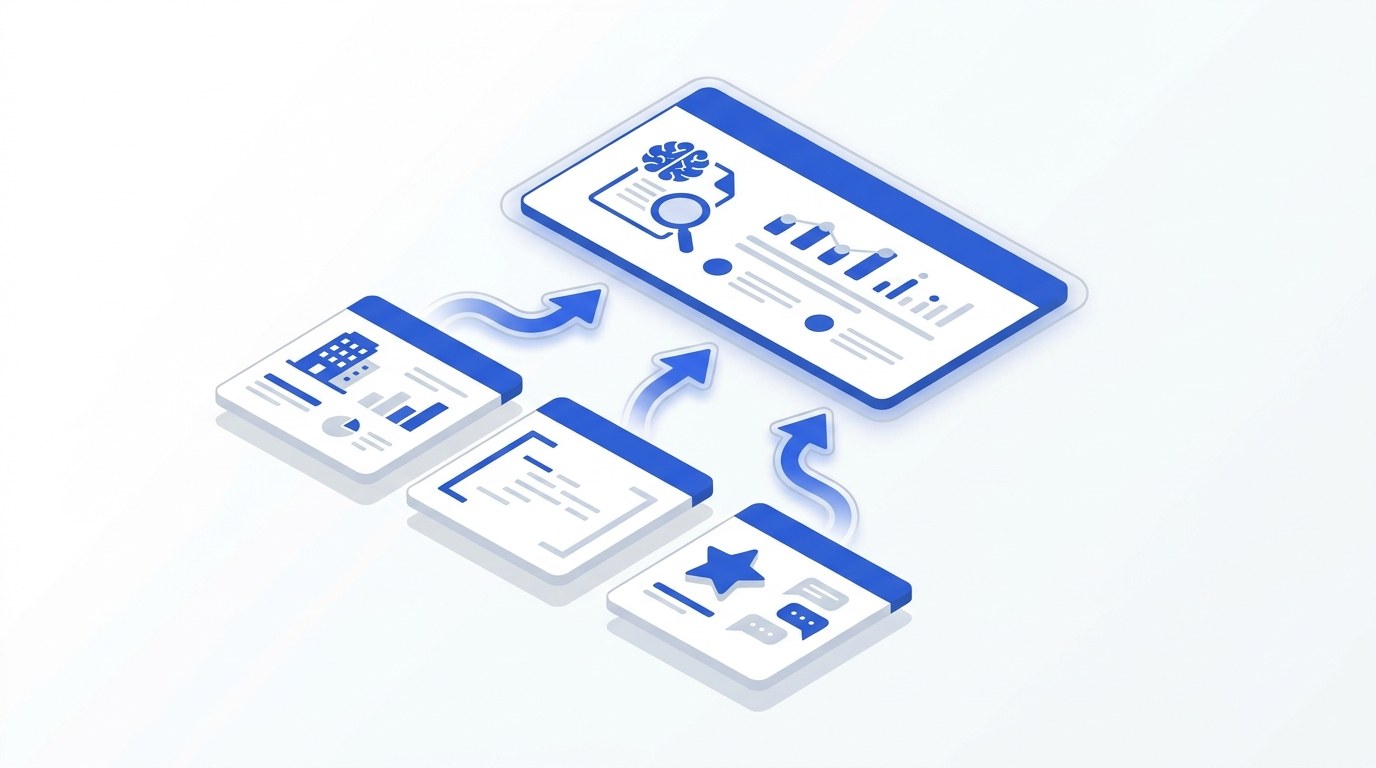
In our last 40 AI Overviews recovery engagements, three changes accounted for roughly 80% of the lift. Not a long checklist. Three specific moves.
Change 1: Industry-Specific Schema, Not Generic LocalBusiness
Most local businesses either have no schema or have generic LocalBusiness schema. AI Overviews wants industry subtype. If you are a dentist, the @type is Dentist, not LocalBusiness. If you are an HVAC company, it is HVACBusiness. If you are a law firm, it is LegalService or Attorney. The list of valid subtypes lives in Schema.org and Google's structured data documentation.
Layer on FAQPage schema with real questions (the same questions appearing in People Also Ask for your core query) and Service schema for each individual service. Three schemas, properly nested, on every service page. We covered the full implementation in the schema markup guide. Most developers can ship this in 2-4 hours per template.
Change 2: Decision-Stage Content, Not Service-List Pages
Service pages that just list what you do are informational. AI Overviews cites decision-stage pages, the ones that help a buyer decide. Examples: pricing transparency posts, "how to choose a [provider] in [city]" guides, comparison pages between your service and an alternative, real-cost breakdowns, and what-to-expect timelines.
The pattern: the page must directly answer a buying-stage question that a real customer is typing into Google. Not "our services" or "why choose us." Real questions like "how much does a root canal cost in Phoenix" or "what should I look for in an emergency restoration company." Those queries trigger AI Overviews more reliably, and pages built specifically to answer them get cited.
Change 3: 90-Day Refresh Cadence
AI Overviews favors fresh content more aggressively than the Map Pack does. Every key page on your site (homepage, service pages, top decision-stage posts) should have a visible last-updated date and a fresh paragraph added every 90 days. The fresh paragraph should reference current data, recent changes in your industry, or new questions customers are asking.
The mechanism: AI Overviews appears to discount pages that have not been touched in 12+ months, even when those pages are technically still accurate. A 200-word update every quarter signals to the engine that the page is being maintained, which improves citation rate.
Why Schema Markup Matters Way More Here
Schema is the load-bearing wall. The reason: AI Overviews has to summarize quickly and accurately, and structured data is the fastest, cleanest way for the engine to confirm what a business is, what it offers, and what other entities (services, locations, FAQs) connect to it. A page without schema forces the engine to infer everything from unstructured text. A page with clean, layered schema hands the engine the answer.
In our last citation rate audit across 200 local sites, pages with industry-specific LocalBusiness + FAQPage + Service schema got cited in AI Overviews at 18.4% of tracked queries. Pages with only generic LocalBusiness got cited at 4.2%. Pages with no schema got cited at 0.9%. The schema delta alone is a 20x lift.
The implementation checklist:
- LocalBusiness with the correct industry subtype (Dentist, HVACBusiness, LegalService, MedicalBusiness, etc).
- FAQPage on every service page with 6-10 real PAA questions pulled from your core queries.
- Service schema for each service offering with provider, areaServed, and serviceType filled out.
- Review schema (aggregateRating + sample reviews) if you have public reviews and the page they live on.
- BreadcrumbList on every interior page so the engine understands site hierarchy.
Validate everything with Google's Rich Results Test before going live. Schema errors silently break citation eligibility, and the tool catches them fast.
How to See What AI Overview Is Showing for Your Queries
Three methods, ordered by reliability.
Method 1: Manual incognito queries. Build a list of 15-20 high-intent queries for your service in your city. Run each one in an incognito browser every two weeks. Screenshot whether an AI Overview appears and whether you are cited. Log the results in a simple sheet. This is the most reliable data because it is what your actual customers see.
Method 2: Google Search Console. GSC now reports AI Overview impressions under the Performance report. Filter by Search Appearance and look for the AI Overviews row. Coverage is incomplete and there is a 2-3 day lag, but it is first-party data and useful for trend lines.
Method 3: Third-party tools. SE Ranking, AlsoAsked, and Profound now track AI Overview presence at the query level. They are imperfect and they sample, but they give you trend lines without manual screenshotting. We use them for client reporting, never as the only data source.
A 30-Day Action Plan
If you have read this far and want to actually fix the gap, here is the 30-day plan we run with clients. No fluff, just the order of operations.
Week 1: Baseline and schema audit. Run 15-20 incognito queries, screenshot every AI Overview, log who is cited. Audit your existing schema with Google's Rich Results Test. Identify which industry subtype you should be using. Pull your competitors' schema for comparison.
Week 2: Schema implementation. Ship industry-specific LocalBusiness, FAQPage, and Service schema to every service page. Validate each one. Re-submit the pages to Google Search Console for re-indexing. Most of this is 6-10 hours of developer work.
Week 3: Decision-stage content. Pick two high-intent, AI-Overview-activating queries from your tracking list. Write one page for each that directly answers the query. Pricing transparency, comparison, or how-to-choose format. 1,200-1,800 words each. Publish with full schema implementation.
Week 4: Freshness pass and re-measurement. Add a last-updated date and a fresh 150-word paragraph to your top 5 existing pages. Re-run the 15-20 baseline queries. Compare to week 1 screenshots. Most clients see early movement on 2-4 queries by day 30, with full citation rate lift continuing into days 45-60.
Want to know exactly why you are not showing up in AI Overviews?
A 15-minute growth analysis call. We run live queries for your business, screenshot every AI Overview, audit your current schema, and tell you the three specific changes that will flip your citation rate. No commitment.
Book a CallFrequently Asked Questions
Why is AI Overviews not showing my business?
Three reasons account for 90% of the cases we audit. (1) Your structured data is missing or generic. Google AI Overviews leans on LocalBusiness schema with the correct industry subtype (Dentist, HVACBusiness, AttorneyService) plus FAQPage and Service schema for context. A generic LocalBusiness tag is not enough. (2) Your site has no decision-stage content that semantically matches the query intent. Map Pack ranking comes from proximity, reviews, and GBP completeness. AI Overviews ranks pages that answer the specific question, which means content has to exist on your site for the engine to cite. (3) Freshness signals are weak. AI Overviews favors pages updated in the last 90-180 days more aggressively than the Map Pack does. Stale service pages get skipped even when the GBP is dialed in.
How to optimize for Google AI Overviews?
Five concrete steps. (1) Implement LocalBusiness schema with the correct industry subtype, plus FAQPage schema on every service page with real PAA questions as the FAQ items. (2) Add Service schema for each individual service you offer, with the @type, name, areaServed, and provider fields populated. (3) Build decision-stage content that answers specific intent queries (pricing transparency posts, comparison guides, how-to-choose-a-provider posts). (4) Update existing service pages every 90 days with a date stamp and a fresh paragraph at the top. AI Overviews reads recency. (5) Make sure internal linking ties each service page to the foundational pillar content. The engine uses internal link graph to understand topical authority.
Does Google AI Overviews use Google Business Profile?
Yes, but less heavily than the Map Pack does. GBP signals (categories, hours, NAP, photos) help AI Overviews confirm you exist and operate in the area, but they do not by themselves get you cited. The Map Pack uses GBP as the primary ranking input. AI Overviews uses GBP as a verification signal, then leans much harder on structured data on your website, semantic relevance of your content to the specific query, and freshness of that content. We have seen businesses with weaker GBP profiles outrank Map Pack leaders in AI Overviews because their schema and content were stronger.
Can I appear in AI Overviews if I'm not in the Map Pack?
Yes. This is one of the most useful observations from our last 6 months of audits. The Map Pack and AI Overview can disagree on the same query because they pull from different signal mixes. Map Pack is heavily weighted toward proximity and review count. AI Overviews weights structured data, semantic match, and freshness more heavily. We have multiple clients ranked 4-7 in the Map Pack who get cited in the AI Overview for the same query because their on-page content directly answers the intent and the schema is clean. Conversely, we have Map Pack #1 rankers who get completely skipped by the AI Overview.
How do I track AI Overview impressions?
Three layers. (1) Google Search Console now reports AI Overview impressions in the Performance report under the search appearance filter. Look for the AI Overviews row. Coverage is incomplete and lags by 2-3 days, but it is the only first-party data source. (2) Manual query tracking. Pick 15-20 high-intent queries for your service in your city. Run them in incognito every 2 weeks and screenshot whether you appear in the AI Overview. This is the most reliable method. (3) Third-party tools like SE Ranking, AlsoAsked, and Profound now track AI Overview presence at the query level. They are imperfect but useful for trend lines.
How long does it take to start showing in AI Overviews after the fixes?
Schema changes typically register in 7-14 days. New decision-stage content typically gets indexed by Google in 24-72 hours and starts appearing in AI Overview citations 14-30 days after indexing. The full lift from a complete fix (schema, content, freshness, internal linking) plateaus around day 45-60. If you have not seen any movement by day 30, the fix was incomplete or the query has very low AI Overview activation in your geography.
Why does my competitor with worse reviews show up in AI Overviews and I don't?
Because review count is a Map Pack signal, not a primary AI Overview signal. Your competitor likely has cleaner structured data, more decision-stage content, or fresher pages than you do. We see this pattern constantly. The fix is not to chase more reviews. The fix is to audit their schema, their service pages, and their internal link graph, then close the gap. Tools like Schema App's validator or even Google's Rich Results Test will show you what schema your competitor is running.
Does Google AI Overviews cite my website or just summarize information?
Both. The summary card is the visible output, but the citations panel on the right shows the source pages. To get cited, you need to be one of the sources the AI pulled from. Citation is the goal because it links directly to your site and drives qualified clicks. Pages cited in AI Overviews convert at roughly 2x the rate of regular organic results because the user has already been pre-qualified by the AI summary.
Find out why AI Overviews is skipping you
A 15-minute growth analysis call. We run live AI Overview queries for your business, audit your schema, and project what 30 days of fixes will do. You walk away with a written action plan.
Book the Free Audit
About the author
Matthew Johnson is the founder of Pleiades Consultancy. He previously scaled his own marketing agency to multiple six figures before serving as CMO of an Amazon agency, where the client base tripled from 15 to 45 active clients during his tenure. He worked with some of the largest names in e-commerce, including Ridge Wallet, HexClad, BK Beauty, The Woobles, Walkize, Lonely Planet, and Obvi. He now works with local businesses to maximize their client acquisition and visibility through AI search with ChatGPT, Claude, Gemini, Perplexity, and Bing Copilot.