TL;DR
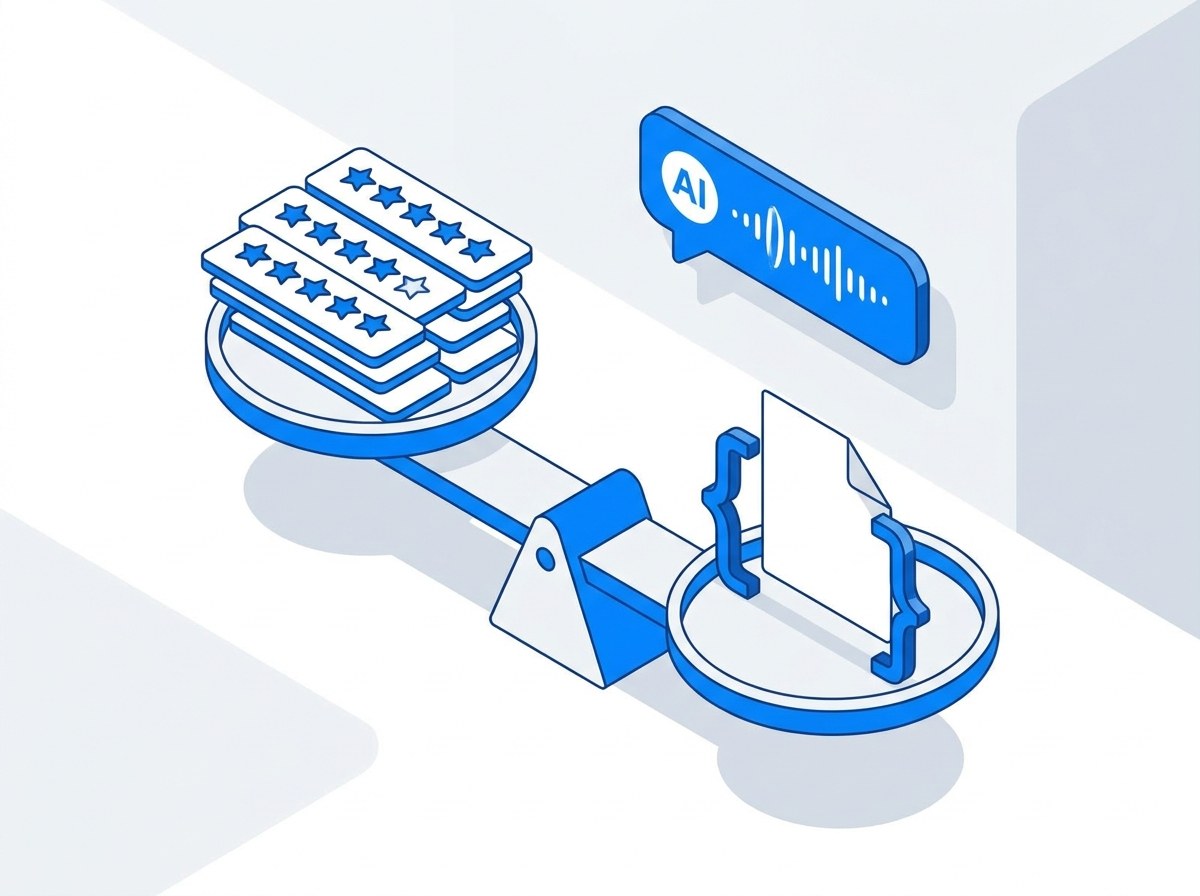
- Reviews are not the lever. ChatGPT does not weight review count the way Google does. Page-level topic ownership triggers the citation.
- ChatGPT reads Bing, not Google. A missing or broken Bing Places listing sends the recommendation to your competitor.
- Single-problem pages win. A 1,400-word "emergency root canal cost in Phoenix" page beats a generic services grid every time.
- Three signal types drive citations. Page authority (~45%), schema (~30%), open-web brand mentions (~25%). Reviews are not on the list.
- First citations land in 14-21 days once you ship one problem-owned page, schema, Bing Places, and Foursquare.
The Short Answer: Reviews Are Not the Lever
You have 412 reviews at 4.9 stars. Your competitor has 78 reviews at 4.6 stars. You ask ChatGPT for the best dentist in your city and it recommends your competitor every time. You assume the model is broken. It is not. It is working exactly the way it is designed to work, and the answer is uncomfortable: ChatGPT is not weighting your review count the way Google does.
The actual lever is whether you own one specific customer problem on a dedicated page. Your competitor has a 1,400-word page called "emergency root canal cost in Phoenix." You have a homepage that lists 14 services in a grid. The user prompted ChatGPT for "a dentist who does emergency root canals in Phoenix." ChatGPT extracted the entities (emergency, root canal, Phoenix, dentist) and matched them to the page that most specifically owns that combination. That was not your page.
Reviews still matter for trust signals once the user lands on your Google Business Profile, but they are not the trigger for the AI citation itself. The trigger is page-level topic ownership plus structured data plus brand mentions across the open web. Three things, in that order.
What ChatGPT Actually Reads (Bing Index, Schema, Brand Mentions)
ChatGPT does not have its own crawler for live local data. When you ask it a local question and it browses the web, it queries the Bing index. This single fact rewires the entire optimization strategy. If your business is not surfacing in Bing, you are not surfacing in ChatGPT. We have audited 200+ local sites and roughly 60% have a Bing Places listing that is either missing, unverified, or carries the wrong NAP. The fix takes 30 minutes. The lift is meaningful.
Beyond Bing, ChatGPT reads structured data. LocalBusiness schema with the correct industry subtype (Dentist, HVACBusiness, LegalService, etc), FAQPage schema on your decision-stage pages, and Review schema where applicable. Schema is how ChatGPT confirms that the page is what it claims to be. Without schema you are betting on the model to infer your topic from your H1 and body copy alone. That bet usually loses.
Third, ChatGPT weighs brand mentions across the open web. Not just backlinks. Mentions. Your business name appearing in a Reddit thread, a local news article, a podcast guest appearance transcript, an industry directory profile, a Foursquare listing. Every one of those is a node in the entity graph ChatGPT uses to decide who is a real business and who is a placeholder. The split between Google and ChatGPT signal-weighting is broken down in detail in the Google vs ChatGPT local search comparison.
Why "Comprehensive Services" Pages Lose to Single-Problem Pages
Every local site we audit has the same architecture. A homepage. An /about page. A /services page that lists 8-20 services in a grid. A /contact page. A blog with 4 posts from 2023. This architecture was built to please Google in 2018 and it is the single biggest reason ChatGPT ignores the business.
ChatGPT is not looking for a comprehensive provider. It is looking for the entity that most specifically owns the problem in the user's prompt. When a user asks "who fixes water damage in finished basements in Cleveland," the model wants to recommend the page literally titled "water damage repair in finished basements in Cleveland." If that page does not exist, the model picks the closest match. Your /services page that mentions water damage in a bullet list is not the closest match. Your competitor's dedicated page is.
We audited a 27-year-old roofing company last month. Three thousand reviews across Google and BBB. Twenty service categories on a single /roofing-services page. Their competitor was 5 years old, 180 reviews, but had built a single page called "hail damage roof inspection cost in [their suburb]." The 5-year-old competitor was cited by ChatGPT, Perplexity, and Claude on 80% of relevant prompts. The 27-year-old company was cited on 8%. Reviews lost to specificity, every time.
This is also why the "just add more pages" advice from generic SEO agencies fails. The strategy is not more pages. The strategy is the right pages, each owning one specific customer problem with depth. The full breakdown of how AI search differs from traditional SEO architecture is in the AI search vs traditional SEO post.
The 3 Signal Types We See Drive Every Citation
After 200+ audits across dental, HVAC, legal, restoration, med spa, and home services, every AI citation we have traced back to a root cause has come down to three signal types. Reviews are not on the list.
Relative weights are our internal estimate based on traced citations across 200+ audits. Exact weights vary by engine and vertical.
Notice what is not on the list. Reviews. Domain age. Backlink count. Page speed (above a basic threshold). These all matter for traditional SEO. They do not move AI citation rate in a way we have been able to measure consistently.
The implication is that the playbook is different. You do not need 500 more reviews. You need 6-10 problem-owned pages, schema implemented correctly, and brand mentions across 15-20 Bing-indexed sources. That stack costs less than a single month of paid ads in most verticals. The full pricing breakdown by tier is in the AI search optimization cost guide.
How to Audit Your Own Site for AI-Citability
You can do a credible version of this in about 90 minutes. You do not need software. Open ChatGPT, Perplexity, and Claude in three tabs. Run the same 10 prompts in each: variations of "best [service] in [city]," "who fixes [specific problem] in [city]," "[service] cost in [city]," and "[service] near me [city neighborhood]." Screenshot every response. That is your baseline citation rate.
Then audit your site against the three signals. Signal one: count your dedicated problem pages. Not service pages. Pages that match a real customer prompt one-to-one. If the count is under 5, that is your number one issue. Signal two: open view-source on your homepage and three service pages, search for "LocalBusiness" and "FAQPage." If you find neither, schema is your number two issue. Signal three: search your business name plus city in Bing. Count how many of the first 30 results are sources you do not control (Foursquare, directories, press, Reddit). Under 10 means brand mention footprint is your number three issue.
That three-step audit gives you a clear priority list. Most businesses we audit have all three problems, but one is always disproportionately worse. Fix the biggest one first and citation rate moves within 30 days. The full DIY versus hire-an-agency tradeoff is in the best AI search agencies 2026 comparison.
What to Do This Week to Start Showing Up
Five concrete steps. Each one takes under 90 minutes. None of them require an agency. If you do all five this week, you will see first citations within 14-21 days.
Step one: pick the single most valuable customer problem you solve. The one where your best customers walked in already convinced they needed exactly that. Write a 1,200-1,800 word page on it. Title it specifically ("[problem] in [city]: [cost or process or decision]"). Cover real pricing, real timelines, the DIY versus hire decision, and a competitor breakdown. Step two: add LocalBusiness schema with your correct industry subtype, plus FAQPage schema on that new page. Step three: claim and complete your Bing Places listing. Step four: claim and complete your Foursquare listing. Step five: submit your business to 3-5 industry-specific directories in your vertical.
That is the minimum viable AI search foundation. We charge for it because most owners do not have 6 hours a week to execute, not because it is secret knowledge. If you want the full sequence of questions to expect during the work, the timeline of when each piece starts producing citations, and the answers to the most common implementation snags, the AI search optimization FAQ covers it end to end.
Want to know exactly why ChatGPT is skipping you?
Free 30-minute call. We run 15 live AI queries for your business across ChatGPT, Perplexity, Claude, and Google AI Overviews. You walk away with a baseline citation rate, the specific page (yours or your competitor's) that is winning each prompt, and the three-signal audit for your site. No commitment.
Book Your Free AI Visibility AuditFrequently Asked Questions
How do I get ChatGPT to recommend my business?
Build a single dedicated page for the one specific problem your best customers came in with, mark it up with FAQPage and LocalBusiness schema, and earn brand mentions for that exact phrase on third-party sites Bing indexes (Foursquare, industry directories, local press, podcast guest spots, Reddit threads). ChatGPT reads the open web through the Bing index. Reviews are not the lever. Topic-specific page authority plus structured data plus brand mentions across the open web are the three things that move citation rate. We see citation rate go from 0% to 15-25% within 30-60 days when a business ships one true problem-owned page and lets the citation network catch up.
Does ChatGPT use Google Business Profile data?
Indirectly, and far less than you think. ChatGPT does not crawl Google. It reads the Bing index plus a curated set of training data. Google Business Profile feeds Google AI Overviews directly, but it only feeds ChatGPT to the extent that GBP data is mirrored on Bing Places, Foursquare, and other Bing-indexed sources. This is why we push Foursquare and Bing Places hard on day 1. If your GBP is perfect but your Bing Places listing is wrong or missing, ChatGPT recommends your competitor. The split between Google and ChatGPT is covered in detail in the Google vs ChatGPT local search breakdown.
Why does ChatGPT recommend my competitor when I have more reviews?
Because reviews are not what ChatGPT weighs most. Your competitor probably has a dedicated page for the exact problem the user described in the prompt. You have a generic services page that lists 12 things you do. ChatGPT extracts entities and matches them to the most topic-specific page it can find. A 1,400-word page titled "emergency root canal cost in Phoenix" beats your 600-word "general dentistry services" page every time, regardless of your 400 vs their 80 reviews. The same dynamic applies in HVAC, legal, restoration, and every local service vertical we have audited.
How often does ChatGPT update its recommendations?
Two layers. The training data layer updates with each model release (roughly every 4-8 months). The retrieval layer (live Bing index lookups via browsing) updates within 7-14 days of new content being indexed. For local businesses, the retrieval layer is what matters most because it pulls fresh data on every query. This is why a brand-new problem-owned page can start generating citations within 2-3 weeks even though the underlying model has not changed. The 7-14 day lag from publish to first citation is consistent across the engagements we run.
Can I pay to be in ChatGPT results?
No. There is no ad inventory in ChatGPT recommendations as of May 2026. OpenAI has signaled paid placement is on the roadmap, but nothing is live. The only way to be cited today is to actually own the problem on the open web. This is the window. Once paid placement launches, the cost to compete will jump 3-5x within 6 months based on how every other ad platform has played out. Businesses that build problem-owned pages now will have a head start that paid budgets cannot easily replicate, because the organic citations compound.
Do I need a separate page for every service I offer?
No. You need a separate page for every specific customer problem you solve well. Those are not the same thing. A dental practice does not need 40 service pages. It needs 6-10 problem-owned pages: "emergency root canal cost in [city]," "dental implants vs bridges in [city]," "sleep apnea dentist in [city] insurance accepted," etc. Each one targets a real prompt a real customer types. The mistake we see most is agencies shipping 20-30 thin service pages that compete with each other for the same citation slot. Fewer pages, deeper coverage, specific problems.
How long does it take for ChatGPT to start recommending me after I make changes?
7-14 days for first citations on a new page, 30-60 days for material citation rate movement (0-5% baseline to 15-25%), and 90-120 days for full topic authority on a problem cluster. The variance depends on three factors: how saturated your city and vertical are, how strong your existing brand mention footprint is on Bing-indexed sources, and whether your schema is implemented correctly on day 1. The realistic timeline by month is broken down in the timelines pillar post.
Does the age of my domain matter for ChatGPT recommendations?
Less than it matters for Google. Bing weights topical relevance and structured data more heavily than domain age, which is why brand-new sites can outrank 20-year-old domains in ChatGPT recommendations within 60 days if the problem-owned page is built correctly. We have seen 6-month-old domains win citation slots over 15-year-old competitors in dental, HVAC, and legal verticals. The lever is not how old you are. The lever is whether you own the specific problem on a dedicated page with proper schema.
Find out why your competitor is getting cited and you are not
Free 30-minute audit. We run live AI queries for your business, identify the exact page winning each citation, and give you the three-signal diagnostic. You leave with a fix list ordered by priority.
Book the Free Audit
About the author
Matthew Johnson is the founder of Pleiades Consultancy. He previously scaled his own marketing agency to multiple six figures before serving as CMO of an Amazon agency, where the client base tripled from 15 to 45 active clients during his tenure. He worked with some of the largest names in e-commerce, including Ridge Wallet, HexClad, BK Beauty, The Woobles, Walkize, Lonely Planet, and Obvi. He now works with local businesses to maximize their client acquisition and visibility through AI search with ChatGPT, Claude, Gemini, Perplexity, and Bing Copilot.