

Key Takeaways
- A DIY AI search audit costs $0 in software and four to sixteen hours of your time. An agency audit is a one-time fee that buys those hours back.
- The 10-minute self-check tells you whether you have a problem. It rarely tells you the ranked path out. That prioritization is what you actually pay an agency for.
- DIY audits reliably miss three things: citation-network depth, competitor benchmarking across markets, and a fix list ordered by citation impact.
- Do the free foundation cleanup yourself first. Then buy the audit so an expert finds the subtle gaps, not the obvious ones you could have fixed for nothing.
- For restoration, prioritize Google AI Overviews and ChatGPT before Perplexity. Emergency water-damage and mold searches are high-urgency and start there.
- Re-check every 90 days. AI models change their sources constantly, and quarterly drift is what costs restoration firms emergency calls.
What an AI Search Audit Actually Is
An AI search audit answers one question: when someone in your service area asks ChatGPT, Perplexity, or Google about water damage, mold remediation, or fire cleanup, does your restoration company show up, and if not, why not.
I audited 60 local businesses last year and only three showed up in AI results at all. That number should scare every restoration owner reading this, because the businesses that were invisible were not bad companies. They had trucks, crews, decent reviews, and years in the market. They just had no idea that a whole new discovery layer had formed on top of Google, and that layer was recommending their competitors.
The audit is not the fix. The audit is the map. It tells you where you stand across every AI surface, what is holding you back, and in what order to fix it. The real question this post answers is not whether you need one. You do. The question is whether you run it yourself or pay someone. For the broader money side of this, the what an AI search content audit costs in 2026 breakdown pairs with this one.
DIY vs Agency: Side by Side
Here is the honest split. Neither column is wrong. They serve different owners at different stages.
| Factor | DIY Audit | Agency Audit |
|---|---|---|
| Out-of-pocket cost | $0 software | One-time agency fee |
| Your time | 4 to 16 hours | 1 to 2 hours (intake call) |
| Per-platform snapshot | Yes, if you are thorough | Yes, standardized |
| Citation-network mapping | Rarely done well | Core deliverable |
| Competitor benchmarking | Surface-level guesswork | 3 to 5 named competitors |
| Ranked fix list | Usually unordered | Prioritized by impact |
| Best for | Owners with time and clean listings | Owners short on time who want the ranked path |
What a DIY Audit Misses
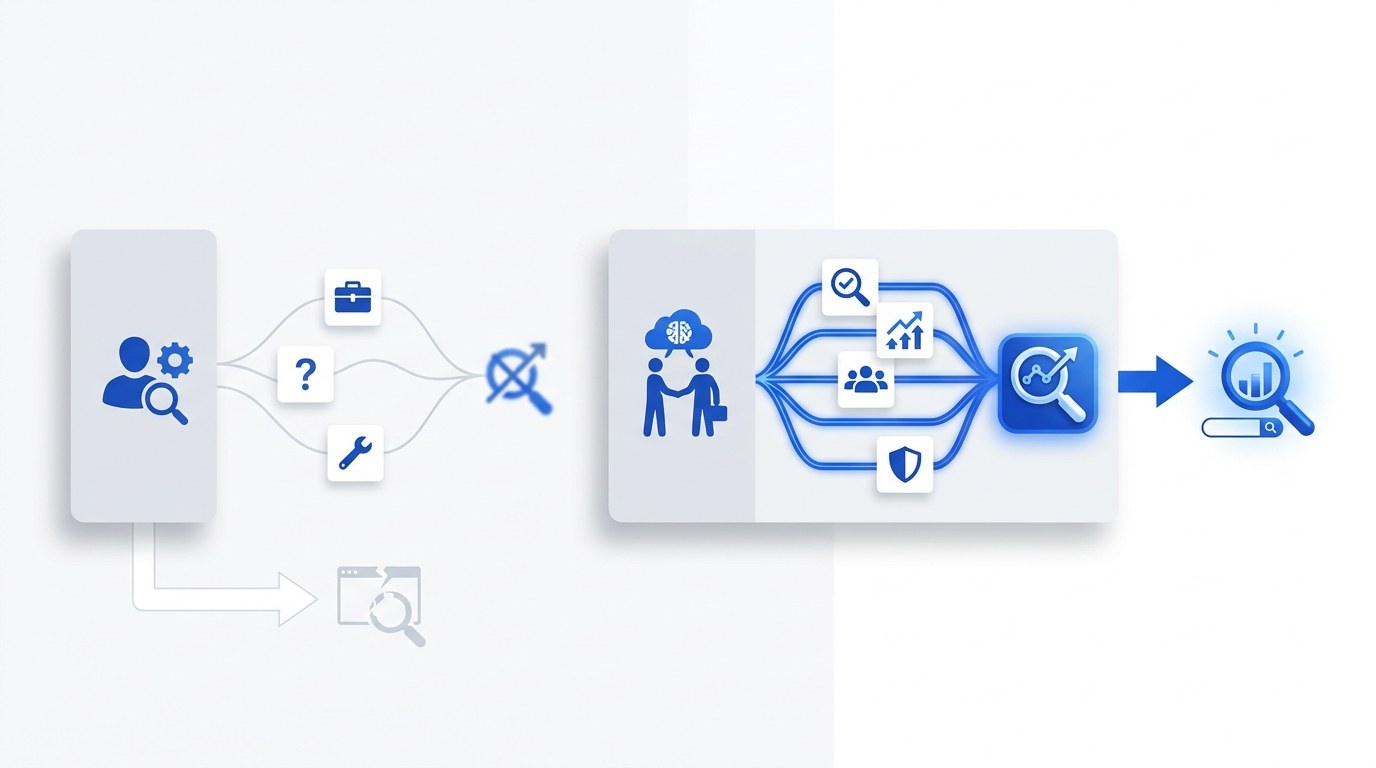
You can do the 10-minute check this afternoon. Open ChatGPT, ask it who the best water-damage restoration company near you is, and see if you appear. Check your schema. Audit five citations. That is real and you should do it today. But there are three things a DIY pass almost never catches, and all three are where the money hides.
1. Citation-network depth
A DIY check confirms a listing exists. It does not confirm the network of sources AI models pull from in your market points back to you consistently. AI does not read one directory. It reads a web of them and weights consistency. You can be listed everywhere and still lose because your name, address, and phone drift by one character across sources. The schema types that actually move AI citations are only half of it. The citation web underneath is the other half.
2. Competitor benchmarking
You can see that you are invisible. What you cannot see, without hours of structured research, is why the restoration company two suburbs over gets cited for the exact emergency water-damage query you lose. That gap is specific. Maybe they have 40 more Google reviews with the phrase "water damage" in them. Maybe they have a service-area page with proper schema and you have one flat homepage. Benchmarking turns "I am losing" into "I am losing because of these five things."
3. Prioritization
This is the real product. A DIY audit hands you 30 problems and no order. An agency audit hands you the five that move citations first. Fixing 30 things in a random order can take six months. Fixing the right five can move your visibility in weeks. That ranking is the difference between busywork and results.
Hours vs Dollars: The Real Math
The DIY audit is free only if your time is free. It is not. If you run crews and your billable hour is worth $150 in restoration work, a sixteen-hour audit costs you $2,400 in opportunity cost, which is more than the agency audit you were trying to avoid. That math flips fast.
Here is how I think about it. The foundation work, cleaning up NAP, claiming Foursquare, Bing Places, and Apple Maps, validating schema, is worth doing yourself. It is four to six hours, it is not hard, and paying an agency $1,500 to tell you your listings are inconsistent is a waste. But the depth work, the citation-network map and the competitor benchmark, is where an outside expert earns the fee, because it takes them two hours and takes you ten.
No one books a call to buy an audit for its own sake. They buy the outcome the audit points at: more emergency calls, more remediation jobs. Frame the decision that way. If DIY gets you to more calls faster because you have the time, do it. If your time is the constraint, the audit fee is buying back sixteen hours and a ranked plan. For the full agency-vs-DIY cost picture beyond just the audit, the what each actually costs in 2026 comparison goes deeper, and the restoration-specific pricing benchmark shows where audits sit inside a retainer.
Which One to Choose
Three clean buckets. Pick the one that matches your reality.
Choose DIY if
You have time in the next two weeks, your listings are already reasonably clean, and you are comfortable running queries and reading a schema validator. You are looking for the obvious gaps, not the subtle ones. Do the free foundation, run baseline queries across all four AI surfaces, and fix what is broken. Most single-location firms can get real movement from this alone.
Choose an agency if
Your time is the constraint, you have already done the obvious cleanup, or you are losing named competitors and want to know exactly why. You are paying for citation-network mapping, real competitor benchmarking, and a ranked fix list. That is the depth a DIY pass does not reach. If you are still deciding whether to hire at all, read whether to hire an AI search agency or wait.
Choose neither, yet, if
You have not done the free 10-minute check. Do that before you spend a dollar or a full day. If it turns out you already appear across ChatGPT and Google AI Overviews for your core queries, you may not need a full audit at all, just quarterly monitoring. Do not buy depth you have not confirmed you need.
Why Restoration Is a Special Case
Restoration searches are not like a dentist search. They are urgent. A flooded basement at 2am is a person who will call the first credible name an AI hands them. That urgency changes the audit priorities. Google AI Overviews and ChatGPT come first because that is where the emergency and research-stage searches land. Perplexity matters more for the deliberate buyer comparing remediation firms after the crisis passes.
Restoration also carries insurance-driven search intent. People search "does insurance cover water damage restoration" and the AI answer that cites a specific company gets that call. A good restoration audit checks whether your content answers those adjacent questions, because those are the queries that convert a panicked homeowner into a job. Whether the whole channel is even worth it for a business your size is covered in is AI search optimization worth it for a small local business.
Whichever route you take, the audit is the starting point, not the finish. It tells you where you stand. What you do with the ranked list is what actually gets you cited.
Want us to run this exact audit on your restoration company?
We map your citation network, benchmark you against your real competitors, and hand you a ranked fix list. No 30-item pile of homework. The five things that move calls first.
Frequently Asked Questions
How much does an AI search audit cost if I hire an agency for a restoration company?
A one-time AI search audit for a restoration company is priced by depth. A shallow audit is a single-market snapshot: where you appear across ChatGPT, Perplexity, Google AI Overviews, plus a schema and citation check. A deep one covers multi-market benchmarking against three to five named competitors, full citation-network mapping, and a prioritized fix list with effort estimates. If the audit rolls into a monthly retainer, most agencies credit the audit fee toward month one. The cheapest audits are usually automated tool reports with no human competitive analysis, so ask to see a sample before you pay.
Can I run an AI search audit myself for free?
Partly. You can run the 10-minute version at zero software cost. Open ChatGPT, Perplexity, and Google, ask the water-damage and mold-remediation questions your customers ask, and write down whether you show up. Check your schema with a validator, confirm your NAP is consistent, and audit five citations. That foundation costs $0 and four to six hours of your time. What you cannot do for free is the depth: citation-network mapping, competitor benchmarking across markets, and knowing which of the 40 things you could fix actually moves citations. The free DIY audit tells you that you have a problem. It rarely tells you the specific, ranked path out of it.
What does a DIY audit miss that an agency catches?
Three things, mostly. First, citation-network depth: a DIY check looks at whether a directory listing exists, not whether the network of sources that AI models actually pull from points back to you consistently. Second, competitor benchmarking: you can see that you are invisible, but not why the restoration company two suburbs over gets cited for the exact query you lose. Third, prioritization. A DIY audit produces a list of 30 problems with no order. An agency audit produces a ranked fix list tied to citation impact, so you fix the five things that matter before the 25 that do not. That ranking is the product you are actually paying for.
How many hours does a DIY AI search audit take?
The honest range is four to sixteen hours for a single-location restoration company, spread over a few days. The 10-minute check is real, but it is a smoke test, not an audit. A genuine DIY audit means baseline queries across four AI platforms, documenting appearances, validating schema on every service page, checking NAP across Foursquare, Bing Places, Apple Maps, and Google, auditing your citation sources, and then researching what your top competitors did differently. Most owners underestimate the competitor-research step, which alone eats four to eight hours if you do it properly. If your time is worth $150 an hour in billable restoration work, sixteen hours of audit is $2,400 of opportunity cost.
Is an agency audit worth it if I only serve one city?
Often yes, but not always. If you serve one metro and have a clean Google Business Profile, consistent citations, and decent reviews, a single-market audit is worth it to find the specific gaps. If you have never touched schema, have inconsistent listings, and know your citations are a mess, spend the first four hours doing DIY foundation cleanup first, then buy the audit so you are paying an expert to find the subtle gaps, not the obvious ones. Paying an agency to tell you your NAP is inconsistent is a waste. Paying them to map why a competitor out-cites you on emergency water-damage queries is not.
Should restoration companies audit for ChatGPT, Perplexity, or Google AI Overviews first?
For restoration, Google AI Overviews and ChatGPT first, in that order. Emergency water-damage and mold searches are high-urgency and often start on Google, where AI Overviews now intercept the answer before the map pack. ChatGPT is the volume play for the research-stage searches, the people asking what to do about a flooded basement at 2am. Perplexity matters less for emergency restoration and more for the deliberate buyer comparing remediation companies. A proper audit checks all four surfaces, but if you are triaging with limited time, fix your Google AI Overviews and ChatGPT visibility before you worry about Perplexity ranking.
What should a restoration AI search audit deliverable actually contain?
A per-platform visibility snapshot showing where you appear and where you do not across ChatGPT, Perplexity, and Google AI Overviews for your core service queries. A schema audit of every service page with the specific missing types. A citation-network map showing which sources AI models pull from in your market and which ones ignore you. A named-competitor benchmark, ideally three to five restoration firms, showing what they have that you lack. And a ranked fix list with effort estimates, so you know the sequence. If the deliverable is a single number and a generic checklist, you bought a tool report, not an audit, and you overpaid for it at anything above $300.
How often should a restoration company re-run its AI search audit?
Baseline audit once, then a lighter re-check every 90 days. AI models update their sources and ranking behavior constantly, and restoration is competitive enough that a quarterly re-check catches drift before it costs you calls. The re-check is lighter than the first audit, two to three hours DIY or a smaller agency add-on, because the citation-network map and competitor list already exist and you are updating deltas, not building from scratch. If you are on a monthly retainer, per-platform monitoring should be baked in and you should never pay separately for the re-check. If you go DIY, put a recurring calendar block every quarter so it actually happens.

About the author
Matthew Johnson is the founder of Pleiades Consultancy. He previously scaled his own marketing agency to multiple six figures before serving as CMO of an Amazon agency, where the client base tripled from 15 to 45 active clients during his tenure. He worked with some of the largest names in e-commerce, including Ridge Wallet, HexClad, BK Beauty, The Woobles, Walkize, Lonely Planet, and Obvi. He now works with service businesses to maximize their client acquisition and visibility through AI search with ChatGPT, Claude, Gemini, Perplexity, and Bing Copilot.