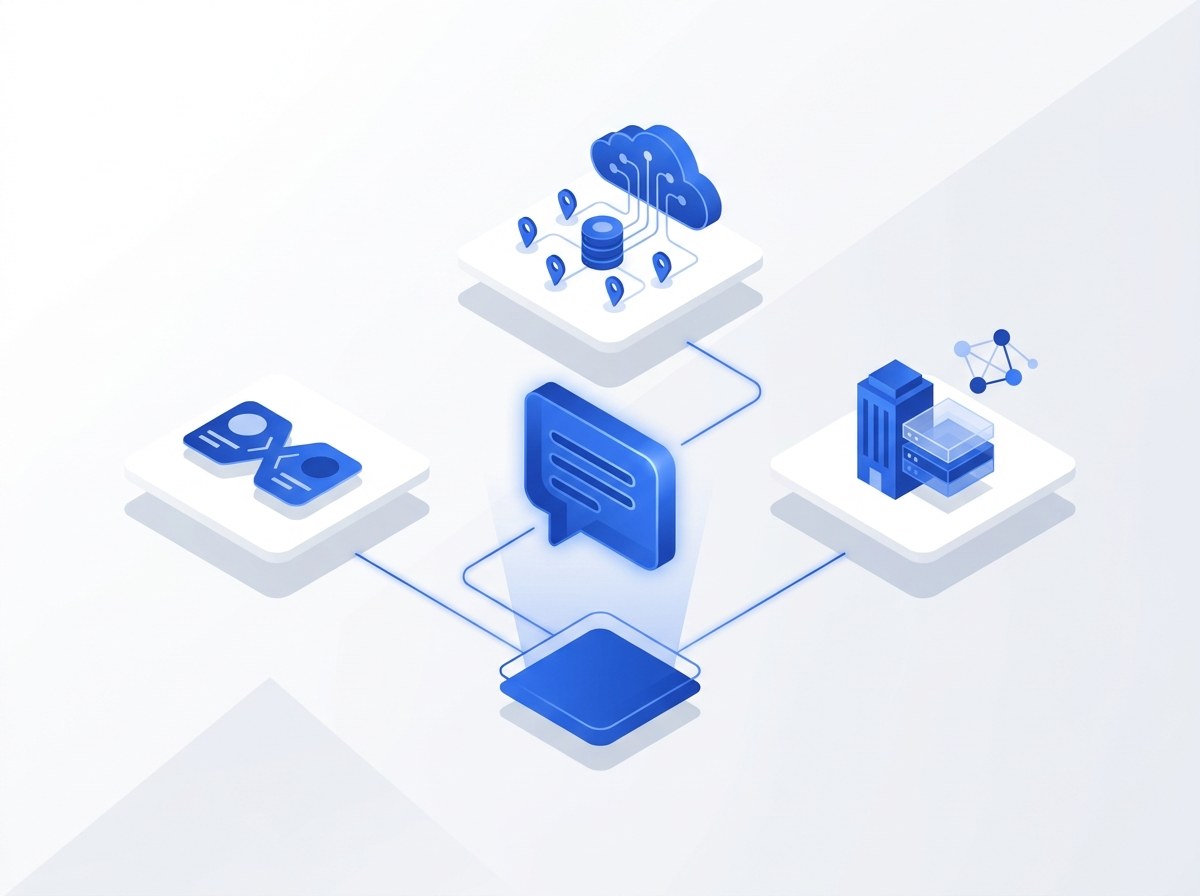
Key Takeaways
- This is not one or the other. Foursquare and Google Business Profile feed different AI engines, so claiming only one leaves you invisible on the other.
- ChatGPT licenses Foursquare's places data directly. A stale or unclaimed Foursquare record is one of the most common reasons a business never appears in ChatGPT.
- Google Business Profile powers Google AI Overviews and AI Mode, which still lean heavily on the Google local pack. It is the floor, not the finish line.
- Inconsistency hurts more than absence. A name, address, and phone that disagree across directories drops your confidence score on every assistant that cross-references sources.
- The claims are free. Foursquare, GBP, Apple Business Connect, and Bing Places cost $0 to claim. Budget for time and ongoing consistency, not for the claim itself.
- The right sequence: claim GBP, then Foursquare, Apple, and Bing in the same sitting with byte-for-byte matching NAP and category.
Here is the question we get from local owners who have finally noticed AI search: do Foursquare listings still matter, or is Google Business Profile the only thing worth claiming? The short answer is that both matter, and they matter for different assistants. The long answer is a table.
| Signal | Foursquare | Google Business Profile |
|---|---|---|
| Primary engine it feeds | ChatGPT (direct data partnership), Apple Maps, many downstream directories | Google AI Overviews, Google AI Mode, Maps, local pack |
| Role in the stack | Location data aggregator scraped by other apps and AI | Google's canonical local record |
| Cost to claim | $0 | $0 |
| Review weight in AI | Foursquare signals plus aggregated data it licenses | Google Reviews, heavily |
| Most common failure | Unclaimed or wrong category, poisoning downstream data | Unverified, thin, or inconsistent NAP |
| If you skip it | Invisible in ChatGPT, the highest-volume assistant | Invisible in Google AI Overviews and Maps |
How LLMs Pull From Location Data
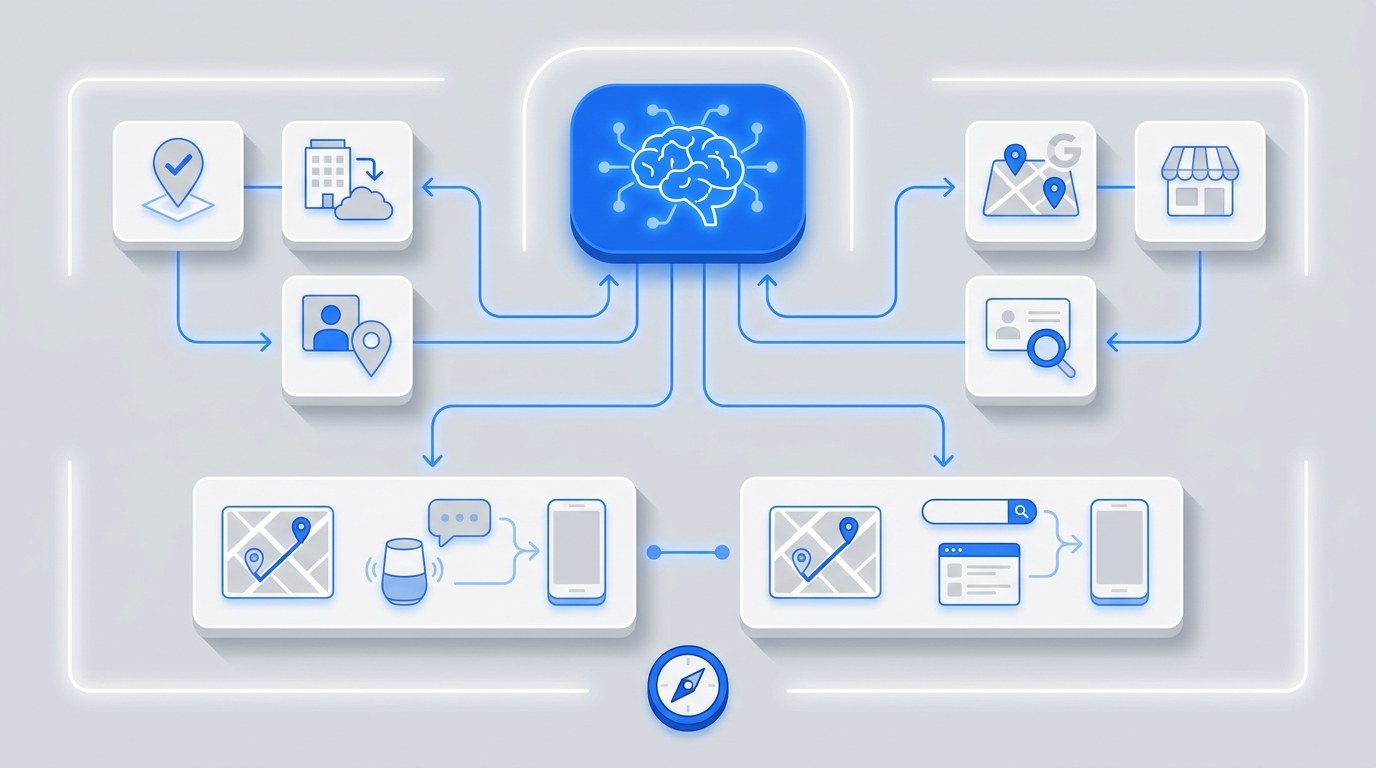
People assume an AI assistant knows about your business the way a search engine crawls a website. That is not how the local layer works. Assistants do not have a fresh opinion about the plumber down the street. They read structured records from location data providers, then decide which business to name based on how complete and consistent those records are.
This is why the same question can return three different businesses on three different assistants. Each one reads from a different data source. ChatGPT reads heavily from Foursquare's licensed places data. Google AI Overviews reads from Google Business Profile and Google Reviews. Siri reads from Apple Business Connect. When those records disagree, the assistant does the safe thing and names a competitor whose records line up.
We saw this directly after auditing 60 local businesses. Only 3 showed up consistently across assistants. The rest failed for one of a few boring reasons: no structured data on the site, an unclaimed or outdated listing on Foursquare, Yelp, Apple Maps, or Bing Places, or contradictory information across those platforms. If you want the deeper mechanics of what feeds each assistant, we broke it down in ChatGPT vs Perplexity vs Google AI Overviews for local visibility.
What Foursquare Actually Does in 2026
Most owners think of Foursquare as a check-in app from a decade ago. That is not what matters here. Foursquare is a location data aggregator. It maintains structured business records (name, address, category, hours, attributes) and licenses that data to a long list of downstream apps and platforms.
The reason it belongs in this conversation at all is the partnership. OpenAI licenses Foursquare's places data directly, so when someone asks ChatGPT for a restoration company in Wisconsin or a med spa in their city, Foursquare is one of the sources feeding that answer. The user never sees the word Foursquare. They just get a recommendation, and your record either supports it or it does not.
There is a compounding effect too. Other directories scrape Foursquare. Get your record right there and it propagates outward to other places that reference it. Get it wrong, with a stale category or a missing suite number, and that error propagates outward too. A single bad Foursquare record does not hurt one listing. It lowers the quality of the aggregated picture that several systems read from.
That is the heavy search volume behind queries like "foursquare claim business listing." Owners are finally realizing the claim is free, fast, and feeds the single highest-volume assistant. If you want a broader view of which platforms are worth your foundation time, we covered the tradeoffs in whether AI search optimization is worth it for a small local business.
What Google Business Profile Actually Does
Google Business Profile is not optional. It is the canonical local record inside Google's world, and Google's world is large. GBP powers Maps, the local pack, and, importantly for this discussion, Google AI Overviews and AI Mode. When Google generates an AI answer for a local query, it frequently surfaces the local pack right inside that answer, and the local pack is drawn from Google Business Profiles.
These systems are not mutually exclusive. For local queries in AI Mode, your Google Business Profile gets used a lot, combined with traditional ranking signals and third-party platforms. To get good performance for local queries in Google's AI experiences, having a claimed, verified, complete GBP is simply necessary going forward. A small sliver of the pie is still the traditional blue-link result, but the profile is doing the heavy lifting.
The mistake we see constantly is treating GBP as the finish line. Owners claim it, get into the local pack, and assume they are covered everywhere. Then they ask the same question in ChatGPT and vanish, because ChatGPT does not read Google's local layer at all. GBP is the floor of a good foundation. It is not the whole building. Reviews reinforce it, and schema on your site reinforces it further, which we get into in which schema types actually move AI citations for local businesses.
Which Citations Actually Count
Not every citation is equal, and chasing every directory on the internet is a waste of your afternoon. The ones that move AI visibility cluster into a short list because they either feed an assistant directly or feed the aggregators that assistants read.
- Google Business Profile. Feeds Google AI Overviews, AI Mode, Maps, and the local pack. Claim, verify, complete every field, keep reviews flowing.
- Foursquare. Feeds ChatGPT directly and propagates to downstream directories. Claim it, fix the category, fill the description.
- Apple Business Connect. Feeds Siri and Apple Maps. If you are not listed, Siri will never pick you up, because that is Apple's affiliated platform.
- Bing Places. Feeds Microsoft's ecosystem and adds a consistency signal that cross-referencing engines reward.
- Your site's schema markup. LocalBusiness structured data tells every crawler what you are, where, and what you do, in a format machines trust.
Everything else is secondary. Get these five right and consistent before you spend a minute on the hundredth low-authority directory. The single biggest lever is not adding more listings. It is making the ones that matter agree with each other exactly.

What to Do: Three Buckets
You do not need a strategy deck. You need to figure out which of three situations you are in and act accordingly.
Claim both if you have neither, or only one
This is most local businesses. If your Foursquare record is unclaimed or your GBP is unverified, that is your afternoon. Claim GBP first, verify it, then claim Foursquare, Apple Business Connect, and Bing Places in the same sitting. Use one canonical name, address, and phone and make every field match byte for byte. This is the highest return work you can do and it costs nothing but time.
Fix consistency if both are claimed but you still do not appear
If both are claimed and you are still missing from assistants, the problem is almost always contradiction. A different suite number on Foursquare, an old phone on Apple, a category mismatch on Bing. Audit all four records side by side, pick the canonical version, and correct every deviation. Then add LocalBusiness schema to your site so the crawler-facing signal matches the directory-facing one.
Do neither yet if your NAP is genuinely in flux
If you are mid-move, rebranding, or changing your phone number next month, do not scatter soon-to-be-wrong data across four aggregators. Wait until your name, address, and phone are stable, then claim everything at once with the final details. Seeding inconsistency you will have to chase down later is worse than a short delay. Get the canonical record right, then propagate it everywhere in one pass.
What It Costs
The claims are free. Foursquare, Google Business Profile, Apple Business Connect, and Bing Places all cost $0 to claim and verify. Anyone charging you a recurring fee to "list your business on Foursquare" is selling you a one-time task on a subscription. The real cost is time and maintenance.
If you do it yourself, budget 4 to 6 hours for the initial foundation across all four directories plus schema. If you hire the cleanup out as a project, multi-directory citation consistency is a one-time engagement. If you fold it into a monthly plan that also covers schema, content, monitoring, and reviews, the price depends on the number of locations and how aggressive the content production is. For a fuller breakdown of what each tier includes, see what you actually get at each price, and if you are weighing doing it in house, agency versus DIY costs lays out the tradeoff.
The honest guidance: pay $0 and a few hours for the claims and initial consistency. Pay recurring only for ongoing monitoring, content, and reviews, which are the parts that actually keep changing. Do not confuse the two.
Want us to audit both listings before you touch anything?
We will pull your Foursquare, Google Business Profile, Apple, and Bing records side by side, flag every inconsistency that is costing you AI citations, and tell you exactly what to fix. No retainer required to find out.
Frequently Asked Questions
Do Foursquare listings still matter for AI search in 2026, or just Google Business Profile?
Both matter, and they matter for different engines. ChatGPT has a direct data partnership with Foursquare, so a claimed, complete Foursquare listing feeds the single highest-volume AI platform for local queries. Google Business Profile drives Google AI Overviews and AI Mode, which lean heavily on Google's own local pack. If you claim only one, you make yourself invisible on the other. We audited 60 local businesses and the pattern held: the ones cited across multiple assistants had both claimed and consistent. The ones cited nowhere usually had a stale or unclaimed Foursquare record feeding bad data downstream.
Why does ChatGPT care about Foursquare specifically?
Because OpenAI licenses Foursquare's places data directly. Foursquare is a location data aggregator, not just a check-in app. It supplies structured business records (name, address, category, hours, attributes) to a long list of downstream apps and, since the partnership, to ChatGPT's location features. That means your Foursquare record can surface in ChatGPT even if the user never heard of Foursquare. Other directories scrape Foursquare too, so a clean record there propagates outward. A wrong category or missing address on Foursquare does not just hurt one listing, it poisons the aggregated picture that several AI systems read from.
If I only have time for one, should I claim Google Business Profile or Foursquare first?
Google Business Profile first, Foursquare same week. GBP is non-negotiable because it powers Google AI Overviews, AI Mode, Maps, and the local pack, which together still touch the majority of local intent. But do not stop there. Foursquare is a 20 minute claim that gets you into ChatGPT, the highest-volume standalone assistant. The mistake we see is treating GBP as the finish line. It is the floor. Claim GBP, verify it, then claim Foursquare, Apple Business Connect, and Bing Places in the same sitting so your name, address, phone, and category match byte for byte across all four.
How much does it cost to get listed and optimized across both?
The claims themselves are free. Foursquare, Google Business Profile, Apple Business Connect, and Bing Places cost $0 to claim and verify. The real cost is time and consistency maintenance. DIY foundation work is roughly 4 to 6 hours plus $0 in software. If you hire it out, citation cleanup and multi-directory consistency is a one-time project, or it is bundled into a broader monthly AI search plan that also covers schema, content, and monitoring. Do not pay a recurring fee for something that is a one-time claim. Pay recurring only for ongoing consistency monitoring and content.
Does a Foursquare listing help if my Google Business Profile is already strong?
Yes, because they feed different engines. A strong GBP can make you dominate Google AI Overviews while you stay completely invisible in ChatGPT, which does not read Google's local layer at all. We have seen a dental practice in Phoenix rank in the Google local pack and still fail to appear when the same question was asked in ChatGPT, purely because the Foursquare record was unclaimed and listed the wrong category. Claiming and correcting Foursquare closed that gap without touching the GBP. They are not substitutes. They are separate channels with separate data sources and separate ranking logic.
What actually breaks AI citations, a missing listing or an inconsistent one?
Inconsistency breaks more citations than absence. An assistant that reads a Phoenix address on Google, a different suite number on Foursquare, and an old phone on Apple Maps does not know which record to trust, so it often cites a competitor with clean, matching data instead. Missing entirely is bad. Present but contradictory is worse, because it actively lowers confidence in your business across every engine that cross-references sources. The fix is boring and it works: pick one canonical NAP (name, address, phone), then make every directory match it exactly, including abbreviations, suite formatting, and category.
How do reviews factor into which platform cites me?
Different assistants weight different review sources. ChatGPT leans on Foursquare's own signals and the aggregated data it licenses. Google AI Overviews leans on Google Reviews and the GBP profile. So reviews are not one bucket, they are per-platform. If all your reviews sit on Google and your Foursquare record is empty, you look thin to ChatGPT and strong to Google AI Overviews. The practical move is to keep Google Reviews flowing for the GBP-fed engines and make sure your Foursquare and Apple records are claimed and populated so the ChatGPT and Siri paths have something real to cite.
What's the first-year payoff of fixing both versus leaving Foursquare unclaimed?
For a single-location local business, the foundation work is a few hours and $0 in software, or a one-time paid cleanup. Once a Foursquare record is claimed and consistent alongside GBP, citation rate across assistants typically climbs from near zero to the 30 to 50 percent range within a few months. At local-service lifetime values of $3,000 to $15,000, one extra customer from an assistant answer covers the near-zero cost of the claim many times over. Leaving Foursquare unclaimed is the cheapest mistake to fix and one of the most expensive to ignore.

About the author
Matthew Johnson is the founder of Pleiades Consultancy. He previously scaled his own marketing agency to multiple six figures before serving as CMO of an Amazon agency, where the client base tripled from 15 to 45 active clients during his tenure. He worked with some of the largest names in e-commerce, including Ridge Wallet, HexClad, BK Beauty, The Woobles, Walkize, Lonely Planet, and Obvi. He now works with local businesses to maximize their client acquisition and visibility through AI search with ChatGPT, Claude, Gemini, Perplexity, and Bing Copilot.