Key Takeaways
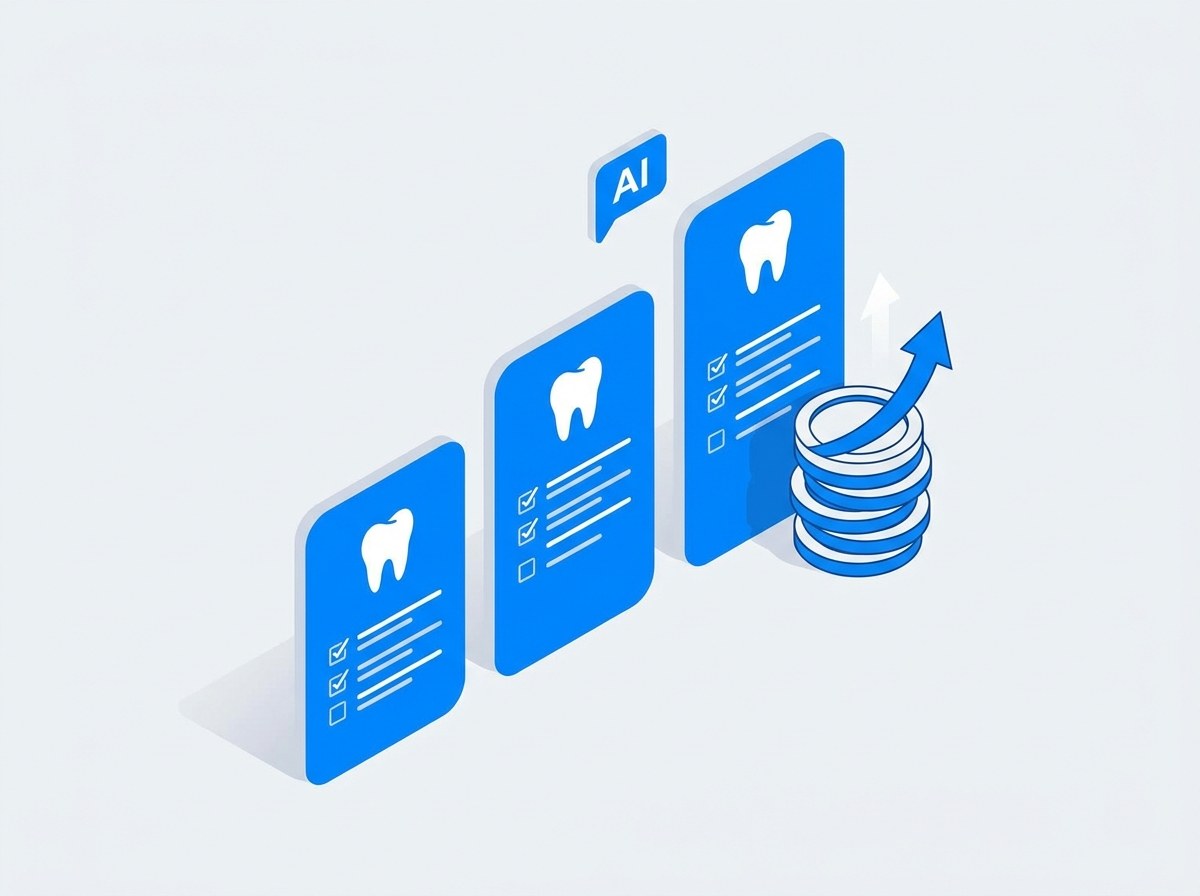
- A single-location general dental practice should budget $800 to $1,800 per month. Cosmetic and implant-heavy practices push into the $1,800 to $2,500 authority tier.
- The $800 to $1,200 starter tier is foundation plus reporting. The $1,200 to $1,800 growth tier adds monthly content and review velocity. The $1,800 to $2,500 authority tier adds depth, entity-building, and weekly tracking.
- Multi-location practices pay a premium: full price for location one, then 40 to 60 percent of the base for each additional location. Each address is a separate entity AI ranks independently.
- On a per-lead basis, AI search optimization usually beats dental PPC once it ramps, and the work compounds instead of stopping when you stop paying.
- Break-even for a general practice is one to two new patients a month. For a cosmetic practice, a single closed case covers a full year of the authority tier.
- Under $500 per month for ongoing work, no per-platform reporting, or self-authored review schema are the three pricing red flags.
I have audited over 200 local businesses across dental, HVAC, restoration, and legal, and the question dentists ask me first is almost always the same. Not "does this work." It is "what should I actually be paying." Fair question. The AI search space is new enough that pricing is all over the map, and plenty of vendors are happy to charge you $4,000 a month for work that should cost half that, or $300 a month for a setup that does nothing after week one.
So here is the honest 2026 benchmark for a dental practice. Real dollar ranges, what you get at each level, what changes when you run multiple locations, and the ROI math against what a new patient already costs you. No "contact us for a custom quote." You should be able to read this and know within a few hundred dollars what your practice should spend.
The Three Pricing Tiers
Dental AI search optimization sorts cleanly into three tiers. The difference between them is not the platform. All three optimize for ChatGPT, Perplexity, and Google AI Overviews. The difference is how much ongoing content and entity work happens on top of the foundation.
| Tier | Monthly Price | Best For |
|---|---|---|
| Starter | $800 to $1,200 | Foundation and reporting, single location, general practice |
| Growth | $1,200 to $1,800 | Content plus reviews, single location, mixed case mix |
| Authority | $1,800 to $2,500 | Cosmetic, implant, full-arch, high-ticket case values |
If you want the deeper platform-by-platform breakdown of where citations actually come from, I wrote about that in why ChatGPT does not recommend your local business even with great reviews. It explains why review count alone does not get you cited.
Starter: $800 to $1,200/mo
This is the plumbing. At $800 to $1,200 a month you get your Foursquare profile claimed and fully filled, because Foursquare is the primary source ChatGPT pulls for local businesses. You get Apple Maps and Bing Places claimed, Dentist and LocalBusiness JSON-LD schema on your site, and NAP consistency cleaned across the top 20 citation sources. You get one baseline audit and a monthly report showing your citation rate on each platform.
What you do not get is ongoing content. So if a competitor across town is publishing procedure explainers and cost-transparency pages every month, the starter tier holds your foundation steady while their content gap widens. Starter is the right call for a practice that needs the entity fixed and wants to see the baseline before committing to more. Most practices do not stay here past three or four months once they see the report.
Growth: $1,200 to $1,800/mo
This is where most single-location practices should live. Everything in starter, plus two to four long-form content assets a month (treatment explainers, insurance and cost questions, "how much does X cost in [city]" pages), a review-generation cadence targeting 5 to 10 new reviews monthly, and monthly per-platform tracking with recommendations, not just a number.
The content is the point. AI engines cite the business that has answered the question the patient is asking. When someone asks ChatGPT "how much are dental implants in Phoenix" or "best sedation dentist near me," the practice with a clear, structured, indexed page on that exact topic wins the citation. That is the whole game, and it is covered in detail in how long AI search optimization takes to work. The growth tier is the tier that produces the assets that get you cited.
Authority: $1,800 to $2,500/mo
The authority tier is built for practices where a single case is worth serious money. Cosmetic, veneers, implants, full-arch. When one closed case is $8,000 to $40,000, the math changes completely and it is worth going deep.
You get four to six content assets a month instead of two to four, an aggressive review system targeting 8 to 15 new reviews monthly, entity-building through dental directory and association citations, comparison content for high-intent buyers (implants versus dentures, full-arch versus individual implants), and weekly citation tracking instead of monthly. This is the tier that positions a practice as the named expert for the high-ticket services, which is exactly what higher-tier dental clients ask us for. It is overkill for a practice that mostly does cleanings and fillings. Match the tier to your case values.
The Multi-Location Premium
Here is where practices get surprised. Multi-location groups cannot ride one profile or one schema block. AI engines rank each location as a separate entity. Three locations means three claimed Foursquare profiles, three location pages with their own schema, three review streams, and three sets of city-specific queries tracked.
The rule we use: location one is full price, and each additional location adds 40 to 60 percent of the base retainer. So a $1,500 base runs roughly $2,100 to $2,400 for two locations and $2,700 to $3,300 for three. It is cheaper per location than paying full price each, because some of the domain-level work carries over, but the entity work at each address does not deduplicate. If a vendor quotes you a flat single-location price for a three-location group, they are either not doing per-location entity work or they are about to surprise you with add-ons.
ROI Math Against New-Patient Cost
Pricing only means something against what a new patient already costs you. Dental pay-per-click in competitive metros runs $8 to $25 per click, converting at 3 to 8 percent, which puts a booked consult somewhere between $150 and $400 in ad spend alone. And that spend stops the day you turn off the campaign.
A $1,500 monthly AI search retainer is a fixed cost that compounds. For a general practice where a new patient is worth roughly $1,200 in first-year value, one new patient covers most of the month and two puts you clearly net positive. Citation rate typically moves in 60 to 90 days, with the first attributable AI-sourced bookings landing between day 45 and day 120. For a cosmetic practice, a single closed case at $8,000 to $40,000 pays for a full year of the authority tier.
The reason the ROI works right now is competition. Very few dentists are optimizing for AI search, so it is cheaper to dominate than the channels where every practice is already bidding. I broke the channel economics down against paid in ChatGPT optimization versus Google Ads for local businesses. If you are still deciding whether to hire at all, the DIY versus agency decision guide walks through which layer to hand off. And if you want to see how the same tiers apply outside dental, the CPA firm pricing guide uses the identical framework with different case values.
The window on this pricing will not stay open. As more practices catch on, competition rises and the cost to win a citation goes with it. The practices that lock in the foundation and content now are the ones AI will keep recommending after everyone else shows up.
Frequently Asked Questions
How much should a dental practice pay for AI search optimization in 2026?
A single-location general dental practice should budget $800 to $1,800 per month. The $800 to $1,200 starter band covers foundation work: Foursquare and Apple Maps claims, LocalBusiness and Dentist schema, NAP cleanup, and a monthly citation-rate report across ChatGPT, Perplexity, and Google AI Overviews. The $1,200 to $1,800 growth band adds monthly comparison and treatment-explainer content plus review-velocity work. Cosmetic and implant-heavy practices chasing high-ticket cases sit at the top of that range or push into the $1,800 to $2,500 authority tier. Anything under $800 per month is either a foundation-only one-time project or a vendor cutting corners on the ongoing content that actually moves citations.
What is included at the $800 to $1,200 starter tier?
Foundation work and reporting, no ongoing content production. That means a claimed and fully-filled Foursquare profile (the primary source ChatGPT pulls for local), Apple Maps and Bing Places, Dentist and LocalBusiness JSON-LD schema on your site, NAP consistency across the top 20 citation sources, and one baseline audit showing where you appear across ChatGPT, Perplexity, and Google AI Overviews. You get a monthly report with per-platform citation rate. What you do not get at this tier is monthly content, so if your competitors are publishing treatment explainers and comparison pages, expect the gap to widen. Starter is right for a practice that just needs the plumbing fixed and will revisit content later.
What does the $1,800 to $2,500 authority tier add?
Depth and velocity. The authority tier stacks everything in the growth tier and adds four to six long-form assets per month (procedure explainers, cost-transparency pages, cosmetic and implant comparison content), an active review-generation system targeting 8 to 15 new reviews monthly, entity-building through dental directory and association citations, and weekly rather than monthly citation tracking. This tier is built for cosmetic, implant, and full-arch practices where a single case is worth $8,000 to $40,000, so the math justifies the spend fast. It is overkill for a small general practice that mostly needs cleanings and fillings. Match the tier to your case values, not to your ego.
Why do multi-location practices pay more?
Because each location is a separate entity that AI engines rank independently. A three-location DSO cannot ride one Foursquare profile or one schema block. Each address needs its own claimed profiles, its own location page with LocationBusiness schema, its own review stream, and its own set of city-specific queries tracked. The rule of thumb we use: the first location is full price, and each additional location adds 40 to 60 percent of the base retainer. So a $1,500 base for location one runs roughly $2,100 to $2,400 for two locations and $2,700 to $3,300 for three. It is cheaper per location than paying full price each, but it is not free, because the entity work does not deduplicate.
Is AI search optimization cheaper than Google Ads for a dentist?
Usually yes, on a per-lead basis, once it ramps. Dental pay-per-click in competitive metros runs $8 to $25 per click and converts at 3 to 8 percent, which puts a booked new-patient consult somewhere between $150 and $400 in ad spend alone, and it stops the moment you stop paying. A $1,200 to $1,800 monthly AI search retainer is a fixed cost that compounds: the citations and content keep working after month six. The tradeoff is time. Ads produce leads this week. AI search optimization typically takes 60 to 120 days to move citation rate. Most practices we work with run both, then shift budget toward AI search as the citations mature.
How long before the spend pays for itself?
For a general practice at a $1,500 retainer, one new patient with a $1,200 first-year value covers most of the month. Two new patients from AI citations puts you net positive. We typically see citation rate move within 60 to 90 days and the first attributable AI-sourced bookings between day 45 and day 120. For a cosmetic or implant practice, a single closed case at $8,000 to $40,000 pays for a full year of the authority tier. The honest answer is that month one and two are investment, months three through six are ramp, and month six onward is where the retainer should be clearly profitable if the work is being done right.
Should I DIY dental AI search optimization instead of paying a retainer?
DIY the foundation. It is roughly 4 to 6 hours and $0 in software: claim Foursquare, Apple Maps, Bing Places, add Dentist schema, fix NAP, and run baseline queries. That alone puts you ahead of most practices. Where DIY breaks down is the ongoing work: four to six content assets a month, review velocity, entity citations, and weekly tracking are a real job, and a practice owner chairside 40 hours a week does not have the time. That is what the $1,200 to $1,800 growth retainer buys. The decision is not DIY versus agency, it is which layer you hand off.
What is a red flag in dental AI search pricing?
Three things. First, any vendor quoting under $500 per month for ongoing work: the content and review layer cannot happen at that price, so you are paying for a foundation setup dressed up as a retainer. Second, no per-platform reporting. If they aggregate ChatGPT, Perplexity, and Google AI Overviews into one blended number, they are hiding where you actually stand. Third, self-authored review or aggregateRating schema on your site. That is a Google violation risk and a shortcut, not optimization. A legitimate $800 to $2,500 retainer shows you exactly what changed, on which platform, and why, every single month.
Want a straight answer on your practice?
We will run a baseline audit across ChatGPT, Perplexity, and Google AI Overviews and tell you which tier your case mix actually justifies. No custom-quote runaround.
Book a free AI search auditKnow your tier and ready to move? Let us map the foundation, content, and reporting to your practice.
Book your strategy callWe also cover this in more detail in our guide to How Much Does AI Search Optimization Cost? 2026 Pricing and Budget Guide.
We also cover this in more detail in our guide to How Much AI Search Optimization Software Typically Costs.
We also cover this in more detail in our guide to AI Search for Startups: What an Agency Costs vs Doing It Yourself in 2026.
We also cover this in more detail in our guide to How Much Does AI Search Optimization Software Typically Cost: What It Actually Costs in 2026.
There is a fuller walkthrough in Monthly AI Search Optimization Plans: What You Actually Get at Each Price.
About the author
Matthew Johnson is the founder of Pleiades Consultancy. He previously scaled his own marketing agency to multiple six figures before serving as CMO of an Amazon agency, where the client base tripled from 15 to 45 active clients during his tenure. He worked with some of the largest names in e-commerce, including Ridge Wallet, HexClad, BK Beauty, The Woobles, Walkize, Lonely Planet, and Obvi. He now works with local businesses to maximize their client acquisition and visibility through AI search with ChatGPT, Claude, Gemini, Perplexity, and Bing Copilot.