
Key Takeaways
- Most AI search agencies sell similar deliverables. The real difference is whether they can prove the work produced customers. Attribution is the thing you are buying.
- Score every agency on four axes: reporting, citation tracking, content model, and contract terms. Weight reporting heaviest.
- A good monthly report answers three questions. Did the phone ring, which jobs came from AI, and what did each one cost.
- Real proof is verifiable without the agency in the room. Type your service and city into ChatGPT and see who gets named.
- Expect month to month terms. A 12 month lock on a young channel is a warning sign, not a norm.
Why Comparing Agencies Is Hard
84 percent of the local business owners we talk to raise the same objection. It is not price. Price came up on 3 percent of our sales calls this year.
The objection is that they cannot tell whether the marketing they already pay for works. So they cannot fire the vendor they have, and they cannot confidently hire the next one.
Every AI search agency pitches the same way. Screenshots of ChatGPT naming a business. A deliverables list. A case study you cannot check. From the outside, the pitches are interchangeable.
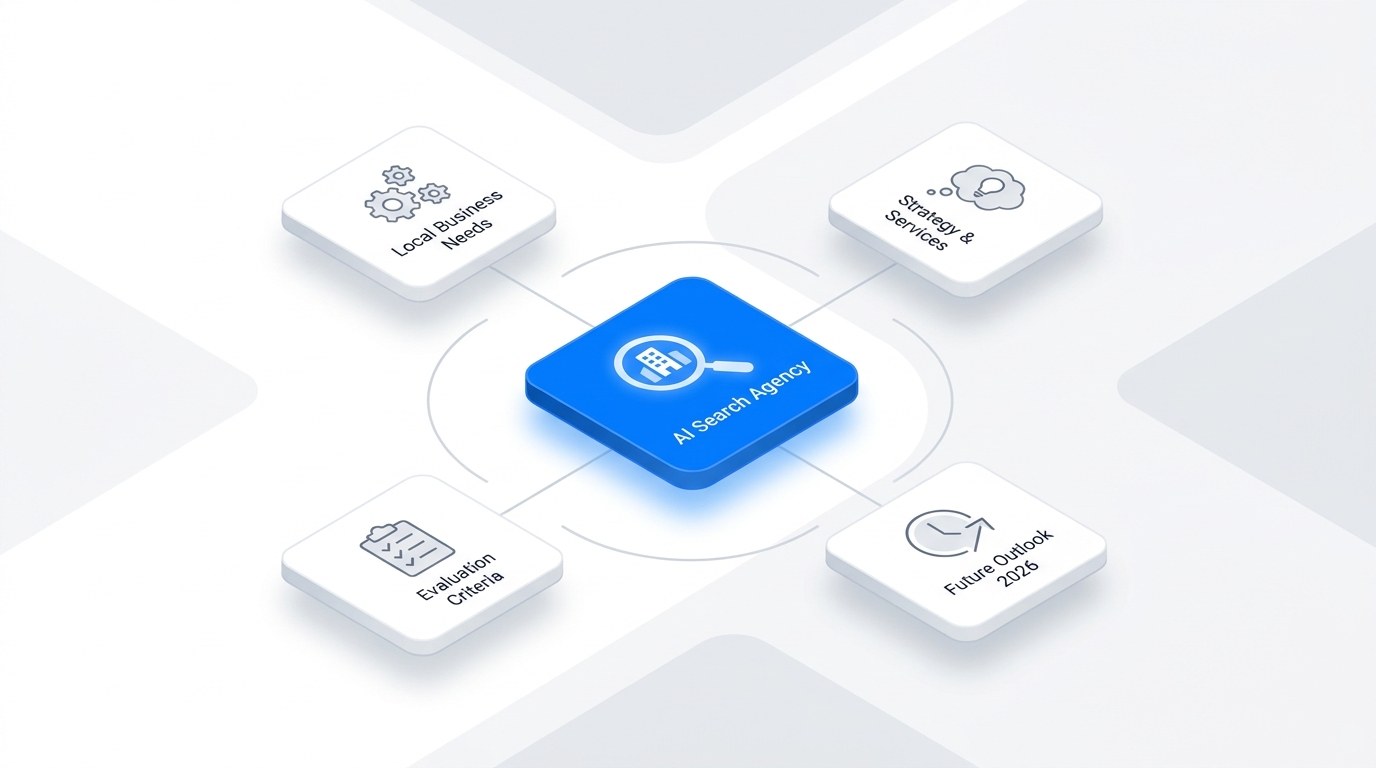
So this is not a ranked list. It is the evaluation matrix we would use if we were the buyer. Four axes: reporting, citation tracking, content model, contract terms.
The Evaluation Matrix
Ask every agency the same questions in the same order and write down the answers. The table is the scorecard. An agency that passes all four axes is worth a trial. An agency that fails reporting fails the whole matrix, whatever else it does well.
| Axis | What a pass looks like | What a fail looks like |
|---|---|---|
| Reporting | Calls, jobs, and revenue tied to AI. One page, monthly. | 30+ pages of impressions and rankings. |
| Citation tracking | Per platform results, dated runs, a query list you approved. | One blended visibility score, no method shown. |
| Content model | Published on your domain, written for your services, you own it. | Syndicated pages on domains the agency controls. |
| Contract terms | Month to month, 30 day out, any setup fee stated in writing. | 12 month lock, ownership reverts to the agency. |
We ran a version of this scorecard against the big platforms in Pleiades vs LocalIQ vs HubSpot if you want to see it applied.
Reporting: The Three Numbers Test
Weight this axis heaviest because it fixes the problem that brought you here.
A useful report answers three questions. Did the phone ring. Which jobs came from AI. What did each one cost. That is it. Citation data, query lists, and content shipped all belong underneath those three as supporting detail.
Here is the pattern from our sales calls. Owners who left an agency almost never said the work was bad. They said they could not tell. More than half had been burned before, and the burn was not fraud, it was fog. Forty page reports produce that fog. They read as hiding even when nothing is hidden.
Ask one question in the sales conversation: show me last month's report for a current client, name removed. The answer tells you more than the case studies do.
Citation Tracking
Citation tracking is the odometer of this channel. It means running a fixed set of real customer queries against ChatGPT, Google AI Overviews, Perplexity, and Claude on a schedule, then recording which businesses get named.
Three things separate real tracking from theater. A query list you approved, because vague queries can be cherry picked. Dated runs, because answers drift week to week. Per platform results, because the assistants disagree with each other and a blended score hides the disagreement.
Ask which interface they test. The ChatGPT app and the ChatGPT API often name different businesses for the same question, and the app is what your customers use.
If you want the mechanics before buying anything, here is how to monitor AI assistants yourself. And if an agency offers a paid audit first, ask to see the raw baseline queries it will test before you pay.
Content Model
Every agency in this space produces content. The questions that matter are where it lives and who owns it.
The strong model: pages published on your domain, written for your actual services and service area, readable by a human without wincing. Those pages keep working if you leave.
The weak model: content syndicated across domains the agency controls, or a private network of directory style sites. It can produce citations, but the visibility belongs to the agency, and it walks when you do.
Ask three questions. Where will the content live. Who owns it if we part ways. Show me three pages you produced for a business like mine. Then actually read the pages. If they could describe any company in any city, an AI assistant has no reason to name yours.
Contract Terms
Month to month is the norm in this market. Treat anything longer as a request for you to carry the risk of a young channel.
Reasonable terms for a single location service business: month to month, any setup fee itemised, cancel on 30 days notice. Ownership of content, profiles, and tracking data stays with you, in writing.
The lock in to watch is not always the term length. It is structural. Content on their domains, tracking in their dashboard with no export, reporting that only makes sense inside their tool. An agency confident in its results does not need a contract to keep you. Retention through proof is the whole game.
What Proof Should Look Like
Ignore proof you cannot reproduce. A screenshot can be one lucky answer out of twenty runs. Proof that counts:
You can type the query yourself. Best water damage company in your city, into ChatGPT, right now. Either the business shows up or it does not. We wrote a walkthrough on checking whether ChatGPT recommends your business.
A lead log, not a dashboard. Real inquiries with dates and sources, including the ones that came from AI assistants. The lead log is the hero asset. An agency that keeps one for clients is measuring what you actually care about.
References currently cited. Two clients in your trade or an adjacent one who get named today, not in a case study from last year.
A dated baseline, run before you pay. If they will not measure the starting line, the finish line will always be negotiable.
How to Decide
Choose an AI-native specialist if you already have a vendor covering traditional SEO that you basically trust, and you want AI coverage added on top. That keeps the comparison clean: one channel, one set of numbers, no replacement fight.
Choose your current vendor if they pass all four axes of the matrix, including per platform citation tracking. Some will. Extending a proven relationship beats onboarding a new one.
Choose in-house if someone on your team has 4 to 6 hours a week and the patience for profile and content work. We ran the full cost math in In-House vs Agency for AI Search Optimization.
Choose none of them yet if your review base is thin or your capacity is already maxed. AI assistants lean on the same trust signals customers do. Start with which local businesses should invest in AI search first.
Next Step
We publish this scorecard because we are willing to be graded on it.
If you want to see what week one attribution looks like before you pay anyone, book a 20 minute call. We run your queries live on the call. No deck, no 40 page report.
Book a 20 minute AI visibility callPrefer to score us against the matrix first? Fair. Book a call and bring your current vendor's last report. We will grade both sides in front of you.
Frequently Asked Questions
How much does an AI search agency cost for a local service business in 2026?
Cheaper retainers cover profile work, citations, and basic tracking. Pricier ones add ongoing content production and per platform reporting. For a market reference, Ahrefs' survey of 439 SEO providers puts local SEO at $1,557 a month on average (ahrefs.com/blog/seo-pricing). One time citation audits are priced by how many platforms and queries get tested, and any setup fee deserves a line item explanation. Proof is the deciding factor, so spend your negotiating energy on reporting terms, not on shaving a little off the retainer.
What should an AI search agency's monthly report include?
Three numbers, stated plainly. How many calls and form fills came in, how many turned into booked jobs, and what revenue those jobs produced. Everything else supports those three: which AI platforms recommended you, which queries triggered it, and what changed since last month. The report should fit on one page. A 30 or 40 page PDF of impressions and visibility scores is not thoroughness, it is padding, and owners read it as hiding. If an agency cannot connect its work to your phone ringing, it is reporting on activity instead of outcomes. Ask to see a real report from a current client, name removed, before you sign.
How do I verify an agency's claims before signing?
Run the checks yourself. Open ChatGPT and type the question a real customer would ask, something like best drain cleaning company in your city. Do the same in Google and read the AI Overview. Ask the agency for two current clients who get named in those answers, then run the same queries for them. Ask to see the exact query list they track and the dates they ran it. Screenshots can be cherry picked, and one lucky answer proves nothing. A live query you type with your own hands is the only evidence that cannot be staged. An agency confident in its work will encourage this test, not steer you away from it.
Should I fire my current SEO agency to hire an AI search agency?
Usually no. AI search optimization works best as an addition to what you already run, not a replacement. Traditional SEO still produces customers, and ripping it out to fund a new channel trades a known return for an unknown one. Keep the vendor that is working, add AI coverage alongside it, and measure both against the same three numbers: calls, jobs, revenue. If your current agency claims it already handles AI search, run it through the evaluation matrix in this guide. If it passes, extend the engagement. If it cannot show per platform citation tracking or attribution, add a specialist rather than starting a replacement fight.
What contract terms are reasonable for AI search optimization?
Month to month is the norm and should be your default ask. The channel is young, so a 12 month lock shifts all the risk onto you. Reasonable terms look like this: month to month, cancel with 30 days notice, any setup fee itemised, and written confirmation that you own everything produced, including content, profiles, and tracking data. Watch the ownership clause hardest. Some agencies publish your content on domains they control, which means your visibility walks out the door with them. And confirm reporting frequency in the contract itself. A vendor that promises attribution verbally but will not put it in writing has told you something.
How long before an AI search agency shows results?
Attribution should start in week one. Not results, attribution: a baseline of where you currently appear, a tracked query list, and a lead log that tags every inbound call by source. First citation movement typically shows in 60 to 90 days for a business with a solid review base, longer in crowded metros. Be suspicious of both extremes. An agency promising ChatGPT recommendations in two weeks is guessing, and an agency asking for 6 to 12 months before showing anything is asking for a long unpaid trust exercise. The honest middle: measurable baseline immediately, citation movement inside a quarter, revenue attribution as soon as the first AI sourced job closes.
What is citation tracking and how should an agency do it?
Citation tracking is running a fixed list of real customer questions against ChatGPT, Google AI Overviews, Perplexity, and Claude on a schedule, then recording which businesses each one names. Done properly it has three parts: a documented query list you approved, consistent run dates, and per platform results rather than one blended visibility number. The platforms disagree with each other constantly, so a blended score hides more than it shows. Ask which interface they test, because the ChatGPT consumer app and the API often return different businesses for the same question. If the method is a screenshot folder with no dates and no query list, that is marketing collateral, not tracking.
What are the biggest red flags when comparing AI search agencies?
Five stand out. Guaranteed placement inside AI assistants, which nobody controls. Long contracts on a young channel. Reports built on impressions and visibility scores with no path to calls and jobs. Content published on domains the agency owns instead of yours. And an inability to name what they would do in the first 30 days that you could check yourself. None of these require the agency to be dishonest. Most are habits carried over from selling traditional SEO. But every one widens the gap between what you pay and what you can verify, and that gap is the exact reason most owners end up burned and unable to say why.

About the author
Matthew Johnson is the founder of Pleiades Consultancy. He previously scaled his own marketing agency to multiple six figures before serving as CMO of an Amazon agency, where the client base tripled from 15 to 45 active clients during his tenure. He worked with some of the largest names in e-commerce, including Ridge Wallet, HexClad, BK Beauty, The Woobles, Walkize, Lonely Planet, and Obvi. He now works with service businesses to maximize their client acquisition and visibility through AI search with ChatGPT, Claude, Gemini, Perplexity, and Bing Copilot.