Key Takeaways
- One phone number and one contact form turn every vendor report into a guess. Add the signals before you add the second agency, not after the first argument.
- Four signals name the source: a spoken intake question, a tracking number per channel, tagged links, and the customer's own words written down verbatim.
- The lead log is the hero asset. One spreadsheet, one owner, both vendors reading the same rows, and no editing history after the fact.
- Self-reported attribution beats analytics for AI search. Nothing in your dashboard shows a ChatGPT recommendation, but the caller will tell you if you ask first.
- When credit is contested, count what each vendor controls. Rankings and paid clicks for one, citations and named recommendations for the other, shared bucket for the rest.
Why One Phone Line Hides the Answer
You're paying two vendors. One runs traditional SEO and your ads. One runs AI search. Both send a monthly report. Both reports claim the same fourteen leads.
Nobody is lying. They can't tell either.
Here's the mechanism. Your site has one phone number and one form. A lead calls, your front desk writes down a name and a job, and that record holds zero information about how the person found you. Analytics logged a direct session, because the caller asked ChatGPT for a recommendation and then typed your name into the browser. The ads platform counts the same person as a conversion, because they clicked an ad eleven days earlier and forgot.
Both systems are guessing from the last thing they could see. Neither watched the moment that decided it. That's not a technical problem. It's a data collection problem, and you can fix it in an afternoon with one question and a spreadsheet.
The Four Signals That Name the Vendor
Run all four and roughly nine out of ten leads sort themselves. Run one and you still beat the situation you're in now.
1. The spoken intake question
Whoever answers the phone asks one thing before anything else. Quick one before we book you in, how did you find us? Ask it first, because once you start solving their problem they stop thinking about how they arrived. Write the answer word for word. If they say they googled you, ask what they typed. If they say AI, capture the exact phrase.
2. A tracking number per channel
Not per vendor. Per channel. One number on your Google Business Profile, one in paid ads, one on the website for organic and AI referrals, your real line in email signatures and on your trucks. The number that rings tells you the channel before anyone speaks. Costs $30 to $150 a month, which is the cheapest thing in this whole argument.
3. Tagged links, everywhere, without exception
Every link either vendor publishes carries UTM parameters. Directory listings, social posts, email footers, guest articles, ad destinations. Agree one naming standard and hold both vendors to it. This covers clicks, which is maybe half your inbound and almost none of your AI-sourced inbound, so it's necessary and not sufficient.
4. The customer's own words
Quote them. Not a dropdown value like "online". The actual sentence. "I asked ChatGPT who does emergency water damage near me and you came up twice." That line is the only proof of an AI-sourced lead you will ever get, and it's worth more than any dashboard screenshot either vendor can produce.
The Lead Log Is the Hero Asset
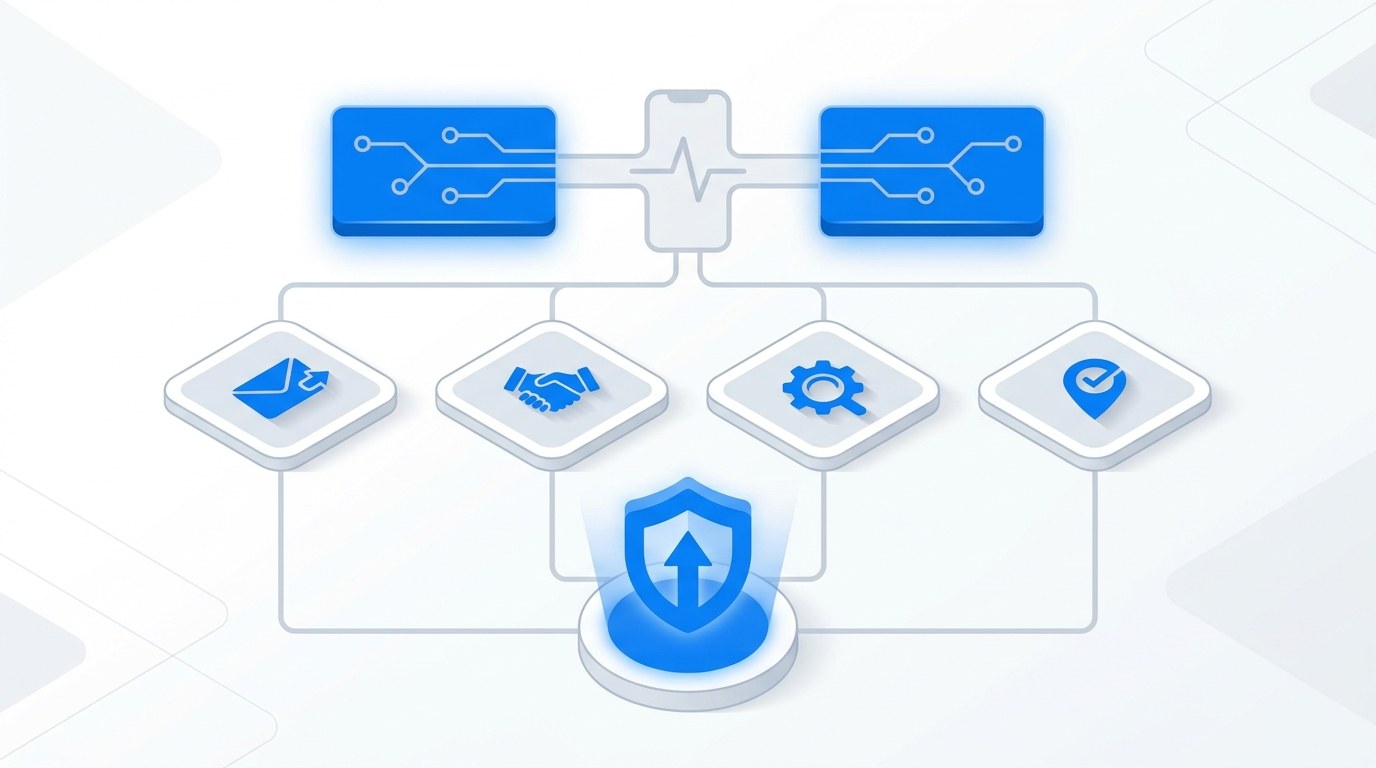
One sheet. Twelve columns. Owned by you, not by either agency, because whoever owns the scoreboard owns the argument.
Columns: date, name, phone, which number rang, self-reported source in their exact words, the search or prompt they used, job type, quoted value, won or lost, close date, revenue, and a notes field. Add a row for every lead including the bad ones, because a log with gaps is worse than no log at all. It just moves the guessing one step later.
Three rules make it work. One person writes it, so the format stays consistent. Both vendors have read access and neither has write access. And nobody edits a row after the week closes. A vendor who wants to reclassify a lead from three weeks ago adds a note, they don't change history. This is the same discipline behind reading what the lead log shows by trade, and it's why the log outlives every vendor relationship you'll ever have.
Attribution Methods Compared
What each method actually proves, and the exact conditions where it fails you.
| Method | What it proves | Cost | Fails when |
|---|---|---|---|
| Spoken intake question | The decision moment, in their words | Free | Staff forget, or ask it last |
| Tracking number per channel | Which channel carried the call | $30 to $150 monthly | Old numbers still live on printed material |
| Tagged links | The exact placement that got clicked | Free | Someone forgets to tag, or a link gets shared |
| Analytics last click | The final touch before the form | Free | Discovery happened off-site, hours or days earlier |
| Vendor dashboard | What the vendor's tool counted | Included | Always. It is marking its own homework |
Splitting Credit Without a Fight
Assign credit by what each vendor controls, decided in advance, written down before the first invoice. Paid click goes to the ads vendor. Ranked organic click goes to the SEO vendor. Any lead whose own words name an assistant goes to the AI search vendor. Calls off the Google Business Profile go to whoever manages that profile. Referrals and repeat customers belong to nobody, and both vendors agree to that in writing.
Contested leads go into a shared bucket that neither side bills against. It's usually a thin slice, and arguing over it costs more than the leads are worth.
Then hold both to the same weekly report: how many times the phone rang, how many jobs you won, how much money cleared. Three numbers. A vendor who sends thirty pages instead is hiding inside volume, which is the pattern we walk through in the three questions any agency should answer in ten minutes. Across 35 growth calls we ran between March and August 2026, 56% of owners already had a vendor and 53% had been burned before and couldn't tell whether the work was working. Price came up once. That's 3%. The problem was never cost. It was never being able to check.
Which Setup Should You Run?
Run the full stack if you take more than 20 calls a month
Intake question, tracking numbers per channel, tagged links, shared log. Do this if you're paying more than $1,500 a month across both vendors, or your combined inbound runs past twenty calls. At that volume the wrong call gets made on the wrong data, and a $60 monthly tool is not what's stopping you.
Run the intake question alone if you're under 15 leads a month
Free, five seconds per call, and it catches the signal that matters most. At low volume, tracking numbers add cost and admin for precision your sample size can't use anyway. Start here, add numbers when volume justifies them. If you're rebuilding after a bad run of agencies, the sequencing in our guide to setting up the next agency so you can fire it with evidence covers what to put in place before you sign.
Do neither, and change vendors instead, if one refuses the shared log
A vendor who won't work against a log they don't control is telling you their number needs protecting. That's not an attribution problem you can tool your way out of. Fix the relationship first. Everything above assumes two vendors who both want the answer.
Your First 30 Days
Week one. Intake question live at the front desk, scripted on a sticky note by the phone. Create the log. Send both vendors the read-only link the same day, so neither one thinks it was built to catch them.
Week two. Provision the tracking numbers and swap them in. Profile first, ads second, website third. Leave your real number on anything printed.
Week three. Agree the UTM standard in one short email to both vendors. Ask them to retag anything live. Anyone who says it isn't necessary has just told you something useful.
Week four. First shared review. Three numbers, twenty minutes, both vendors on the same call reading the same rows. That meeting is the entire system. It's also what a 30-day checkpoint should look like, which we cover in what should be visible by day 30.
Frequently Asked Questions
How do I know if a lead came from ChatGPT or from Google?
Ask them. That sounds too simple, and it's still the most reliable method available in 2026. AI assistants don't reliably pass a referrer, so a person who asks ChatGPT for a recommendation, then types your business name into their browser, lands in your analytics as direct traffic. Your Google Ads dashboard may also claim that same person if they clicked an ad two weeks earlier. Neither system saw the moment that decided it. A spoken intake question does: whoever answers the phone asks how the caller found you, before anything else, and writes the answer down word for word.
What exactly should I ask callers, and when?
Ask it first, before you take the name or the job details. Once you start solving their problem, they stop thinking about how they got to you. The wording that works is casual: quick one before we book you in, how did you find us? If they say they googled you, ask what they typed. If they say a friend, ask who. If they say ChatGPT or AI, write the exact phrase they used. Don't offer a menu of options, because people pick the first plausible one. Open question, verbatim answer, logged in the same row as the lead.
How much does call tracking cost for a two-vendor setup?
Budget $30 to $150 per month. Entry plans from the mainstream call tracking providers start around $45 per month and include a handful of numbers plus a few hundred minutes. A single-location business running four numbers, one for Google Business Profile, one for paid ads, one for organic and AI referrals, and your real line for existing customers, usually lands between $45 and $80. Multi-location or high call volume pushes you toward $150. Extra numbers are typically $2 to $5 each and extra minutes run a few cents. It is the cheapest line item in this entire argument.
Won't adding a second vendor break what the first one built?
It doesn't have to, and the split is usually cleaner than owners expect. Traditional SEO work lives in rankings, site speed, backlinks and page structure. AI search work lives in citations, entity consistency, structured data and the sources assistants actually read. The overlap is the website itself, which is why you write down who touches what before either of them starts. We covered the mechanics of that split in more detail in our guide to <Link href="/blog/adding-ai-search-alongside-your-current-seo-agency">adding AI search alongside your current SEO agency</Link>. The one rule that matters: one person has publish rights, and every change is logged.
What if both agencies claim the same lead?
Put it in a shared bucket and let nobody bill for it. Contested leads are usually a small slice, and fighting over them costs more than they're worth. The vendor who wants sole credit brings evidence you can verify without them in the room. For AI search that's easy: type the prompt into ChatGPT yourself and see whether the business comes up. For paid, it's the click timestamp against the call timestamp. If a vendor can only prove their claim with a screenshot from their own dashboard, that isn't proof. It's a claim wearing a chart.
Can Google Analytics tell me which vendor produced the lead?
Partially, and the part it misses is the part you're arguing about. Analytics is good at paid clicks and tagged links, because both arrive carrying identification. It's weak on anything that involves a person hearing your name somewhere and typing it in later, which describes most word of mouth and nearly all AI-assisted discovery. Those sessions land in direct or organic, and last-click reporting hands the credit to whichever channel touched them most recently. Analytics is one input to the lead log. It is not the lead log, and it should never be the only vendor scorecard you look at.
How long before the lead log actually tells me something?
Thirty to sixty days for direction, ninety for confidence. With ten to fifteen leads a month you'll see a shape by week four: which channel produces calls, which produces quotes, which produces signed jobs. Under ten leads a month, single months swing too hard to read, so look at rolling sixty-day windows instead. Two things speed this up. Log every lead, not just the interesting ones, because a log with gaps is worse than none. And record the outcome, not just the source, since a channel producing calls that never close is a cost, not a win.
What does it cost to have someone else run attribution for me?
Most AI search retainers in the $800 to $3,000 per month range include lead logging and weekly reporting as part of the engagement, not as an add-on. If a vendor charges separately for attribution, expect $150 to $500 per month for the reporting layer on top of the retainer. Setup, meaning number provisioning, UTM standards and the log itself, is usually a one-time $250 to $750 if it's billed at all. We break down what belongs in the base fee in our post on <Link href="/blog/ai-search-retainer-terms-month-to-month-setup-fees-add-ons">AI search retainer terms</Link>. Attribution should be included. It is how you audit them.
Want the log built for you in week one?
We add AI search alongside whoever you already pay, and we report into the same lead log your other vendor reads. Three numbers a week, and proof you can check without us in the room. Book a growth analysis call and we'll map your current attribution gaps on the call.
Book your call
About the author
Matthew Johnson is the founder of Pleiades Consultancy. He previously scaled his own marketing agency to multiple six figures before serving as CMO of an Amazon agency, where the client base tripled from 15 to 45 active clients during his tenure. He worked with some of the largest names in e-commerce, including Ridge Wallet, HexClad, BK Beauty, The Woobles, Walkize, Lonely Planet, and Obvi. He now works with local businesses to maximize their client acquisition and visibility through AI search with ChatGPT, Claude, Gemini, Perplexity, and Bing Copilot.