
Key Takeaways
- 'Give it 90 days' is a fair ask. AI search results do take time to compound. It's also the easiest place for a stalled engagement to hide.
- A real ramp shows work every week before the phone rings: citations corrected, a lead log you can open, the first AI mention caught at intake.
- Day 7, day 14 and day 30 each have one check you can run alone in 15 minutes, without the agency's report.
- The checks are simple. Can you see the fixes, can you see the log, can you hear it at intake.
- At day 30 you make one of three moves: stay, renegotiate the reporting, or leave. The evidence tells you which.
Why 90 Days Is Fair, and Also a Hiding Place
I tell new clients two to three months, and I mean it. Directory corrections take one to six weeks to propagate. Each AI model refreshes what it knows about a local business on its own schedule.
I've also watched a dental practice I work with take its first AI-sourced call inside the first month. So the honest version is that it usually takes two to three months, and sometimes it doesn't.
The 90-day line is true, and it's also a perfect hiding place. An agency that has done nothing and an agency that has done everything right sound identical at day 20. Both say 'give it time'. The words match. The work underneath doesn't.
In 35 growth calls I ran this year, more than half the owners had already paid someone for marketing and couldn't say whether it worked. They weren't telling me it failed. They had no idea. You don't need to understand what the agency does. You need to be able to see whether anything is moving.
What Moves Before the Phone Rings
Results lag. Work doesn't. Three things should be visible in the first 30 days of any AI search engagement, long before you can fairly judge leads.
- Citations fixed. Your name, address, phone and hours on the directories AI models actually read: Foursquare, Bing Places, Apple Maps, and the directories for your trade. Corrections are checkable. Either the wrong phone number on Bing is gone or it isn't.
- The lead log live. A shared sheet where every enquiry gets a row: date, source, what happened next. Phone rang, job won, cheque cleared. If it doesn't exist by the end of week one, attribution was never part of the plan.
- The first AI mention at intake. A caller or a form fill says they found you on ChatGPT or in a Google AI answer. You can't force it. You can make sure the front desk asks, so it gets caught the day it happens.
None of these is a result. They're evidence that results are being built, and you can verify every one without the agency in the room. If your scope never named them, read what an AI search agency should put in writing before you pay.
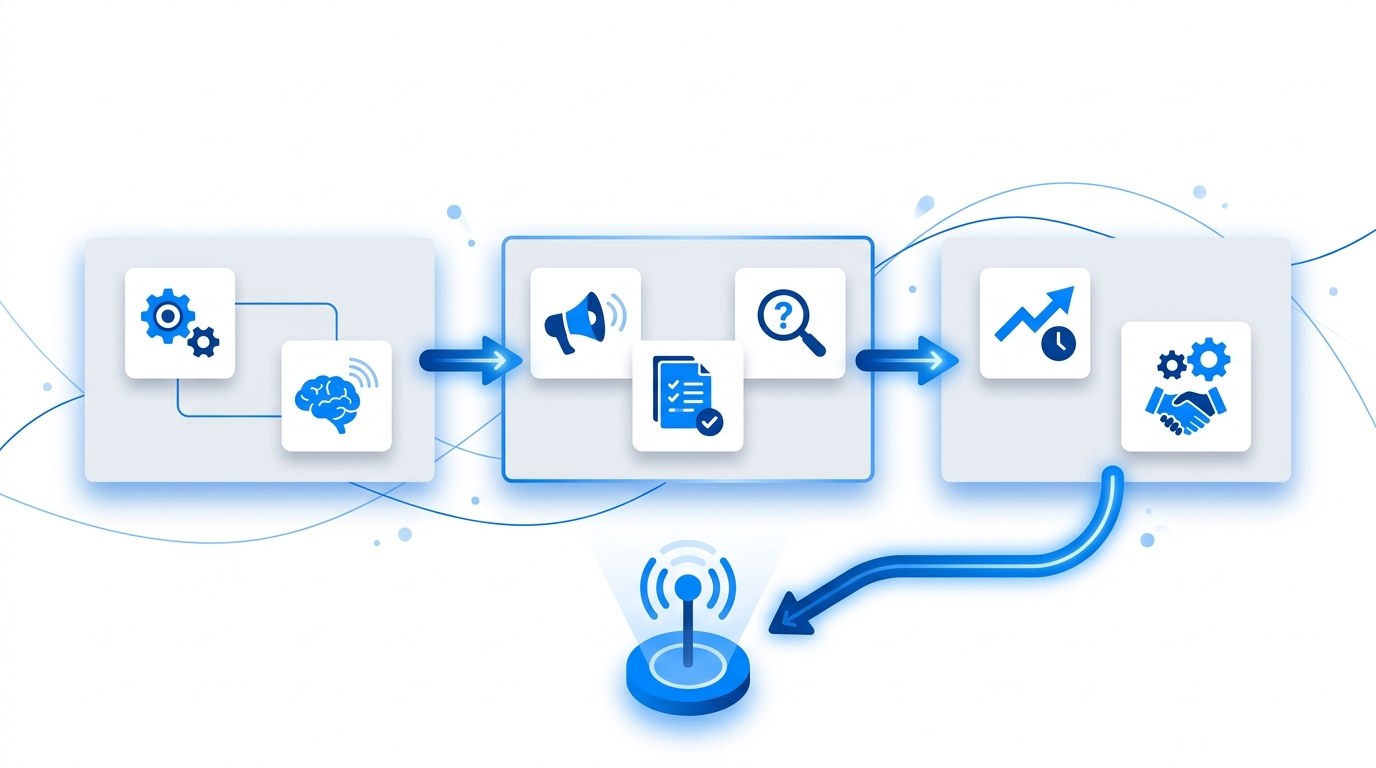
Day 7: The Setup Check
Open your inbox. By day 7 you should have three things from the agency: a written scope, a list of the citations they found wrong, and a link to the lead log. One page each is plenty.
Run one check yourself. Pick two directories from their list and search your business on them. Is the phone number right? Are the hours right? If they've submitted corrections and nothing has changed yet, that's normal at day 7. If they can't tell you which directories they touched, that isn't.
A ramp at day 7 is a scope, an error list with your mistakes on it, and an empty log with your business name at the top. A stall is an onboarding call, a welcome email and a promise.
Day 14: The Log Check
Open the lead log. By day 14 it should have rows in it, even though none came from AI yet. Every call and form fill from the last fortnight, with a source next to it. A log with 18 leads that all say 'Google' or 'referral' is doing its job. That's the baseline the AI work gets measured against.
Second check. Type your own question into ChatGPT. 'Best emergency plumber in Tulsa', or whatever your trade and town are. Screenshot the answer, date it, file it. You're not expecting to be in it. You're building the before picture, which is the one thing a report can't argue with later.
A ramp at day 14 has rows in the log, a dated screenshot, and an email listing what got corrected that week. A stall says 'still in the crawling phase'.
Day 30: The Intake Check
Day 30 is where the three checks meet.
Re-run your ChatGPT question and two more like it. Put the answers next to the day 14 screenshots. You may not be cited yet. You're looking for movement: a competitor gone, your listing showing up in the sources, the right phone number where the wrong one used to be.
Then ask the front desk whether anyone this month said they found you through an AI tool. A carpet cleaning company I work with in Northern California had a customer text to say they'd found the business on ChatGPT. One text. It went straight into the log as the first AI-attributed row, and that's exactly what this check is for.
Finally, ask the agency for three numbers by source, not a deck. Calls this month, jobs won, revenue collected. If the answer is a 30-page PDF, the numbers you asked for aren't in it. How to monitor which AI assistants recommend your business covers tracking the answers yourself if the agency won't.

Ramp or Stall at a Glance
Print this and run it on the dates. Fifteen minutes each time.
| Checkpoint | A real ramp | A stall |
|---|---|---|
| Day 7 | One-page scope, citation error list, lead log link | Welcome call, no list, 'we're still auditing' |
| Day 14 | Log has rows with sources, weekly list of fixes | Log blank, 'crawling phase', no fix list |
| Day 30 | AI answers have shifted, front desk asking at intake, three numbers by source | Same answers, a PDF, 'give it 90 days' |
| Day 60 | First AI-attributed rows in the log | Scope reworded to 'brand awareness' |
The Decision at Day 30
Three buckets. Pick the one the evidence puts you in, not the one the account manager's tone suggests.
Choose to stay if all three checks passed. You've seen the fixes, the log has rows, and the AI answers have moved even slightly. That's a ramp from the inside. Give it the 90 days you agreed to and keep running the checks every fortnight.
Choose to renegotiate if the work is visible but the reporting isn't. Citations got fixed, but there's no log, or the report is a deck with no source column. Ask for the three numbers weekly and the log by Friday. Agencies doing the work agree in one email. Burned by three agencies? Set up the fourth so you can fire it with evidence is the longer version of that email.
Choose to leave if nothing you can check has changed. No scope, no fix list, no log, the same AI answers, and 'trust the process'. That isn't a ramp. You're paying a retainer for a stall. Leaving at day 30 costs one month. Staying to 90 costs three. Read when switching AI search agencies is worth it first, because switching restarts a clock of its own.
What to Say at the Day 30 Meeting
Bring the three checks and say this, more or less.
'I'm not asking for results yet. I'm asking to see the work. Which citations did you correct, and where can I see them? Where's the lead log? What are the three numbers for this month, by source?'
Then stop talking. An agency doing the work answers in five minutes with links. An agency that isn't talks about phases. If you hear 'six to twelve months' for the first time in this meeting, that number wasn't in the scope you signed. If the retainer suddenly needs to rise to get there, the 2026 pricing guide shows what the work should cost.
Frequently Asked Questions
Is 90 days a reasonable ramp for AI search optimization?
Yes. I tell new clients two to three months before I expect the phone to ring from an AI answer. Directory corrections take one to six weeks to propagate, and each AI model refreshes what it knows about a local business on its own schedule. Some businesses see AI-sourced calls inside the first month, so the ramp isn't fixed. What isn't reasonable is 90 days of silence. The work should be visible in week one and every week after. If all you've received by day 30 is the phrase give it time, the ramp has become a stall.
What should an agency show me in the first 30 days?
Three things. A written scope, one page is fine, listing what they'll fix and what they'll report. A citation audit with your actual errors on it: the wrong phone number on Bing, the old address on Apple Maps, missing hours on Foursquare. And a lead log you can open, with every enquiry dated and sourced. By day 30 you should also be getting a weekly email listing what changed that week. None of that is a result. All of it is evidence that results are being built, and every piece is something you can verify yourself without the agency in the room.
How do I check my AI citations without the agency's report?
Type the question a customer would ask into ChatGPT, into Google with AI Overviews on, and into Perplexity. Best emergency dentist in Mesa, or the equivalent for your trade and town. Screenshot each answer, date it, and save it. Do it at day 14 and again at day 30. You're not looking for your name on the first try. You're looking for movement: a competitor dropping out, your directory listing appearing in the sources, the right phone number where the wrong one used to be. Dated screenshots are proof nobody can argue with, whatever the monthly report says.
What does a lead log look like, and when should it exist?
A shared spreadsheet is enough. One row per enquiry: date, name or job reference, how they found you, what happened next, and the value if the job closed. Phone rang, job won, cheque cleared. It should exist by the end of week one, before any AI work could possibly show up in it, because the first month of rows is your baseline. If the agency hasn't set one up by day 14, set one up yourself and share it with them. An agency that then refuses to fill in its column has just shown you what its reporting will look like at day 90.
How much should I be paying during the ramp period?
The same as after it, which is why visible work matters so much. For a market reference, Ahrefs' survey of 439 SEO providers puts local SEO at $1,557 a month on average, $1,819 from agencies and $1,150 from freelancers (ahrefs.com/blog/seo-pricing). That's a local SEO figure, not an AI search one, but it's the closest published benchmark. Standalone AI monitoring, where someone tracks your answers and does nothing else, should cost well under a full-service engagement. Multiply your own monthly fee by three: that's what a 90-day ramp costs before you can fairly judge leads. That's fine if you can see fixes landing and a log filling up. It's an expensive silence if you can't.
My agency now says results take six to twelve months. Is that normal?
It's a change of story, and the timing tells you more than the number does. Some work genuinely takes that long. But if six to twelve months wasn't in the scope you signed and it arrives at day 30 with nothing to show, the goalposts are moving. Ask one question: what will I be able to see at day 60 that I can't see today? A real answer names specific things. Corrections on named directories, rows in the log, a shift in a named AI answer. A vague answer means the timeline exists to protect the retainer, not to describe the work.
Should I switch agencies at day 30 if nothing is visible?
Only if nothing checkable has moved. Switching restarts the clock. The new agency needs its own two to three months, and you lose whatever the first one did that you couldn't see. So run the three checks first. If the fixes are visible and only the reporting is missing, renegotiate instead. If there's no scope, no fix list, no log and the same AI answers, leave. One wasted month is cheaper than three. Before you hand over, get the list of citations that did get corrected, so the next agency doesn't bill you to redo them.
Do the day 7, 14 and 30 checks work for a traditional SEO or ads agency too?
Mostly, yes. The lead log check and the intake check apply to any marketing spend, because the question is always the same: did the phone ring, did the job close, did the money arrive, and from where. The citation check is specific to AI search and local SEO. For an ads agency, swap it for show me the ad account. If they won't give you read access to your own ad account by day 7, that's your answer. Work is visible before results are, and an agency that can't show the work is asking you to fund a stall.
The Checks, Run for You
Book a growth analysis call and I'll run the three checks with you. I'll pull your current AI answers, look at what your agency has actually corrected, and tell you which bucket the evidence puts you in. If they're doing the job, I'll say so.
Book a growth analysis callBring the day 14 screenshots. If you haven't taken them yet, book 30 minutes and we'll take them on the call.
We also cover this in more detail in our guide to Two Vendors, One Phone Line: How to Tell Which Agency a Lead Came From.
There is a fuller walkthrough in What a Marketing Report Should Show a Local Business Owner: Three Numbers, Not Thirty Pages.

About the author
Matthew Johnson is the founder of Pleiades Consultancy. He previously scaled his own marketing agency to multiple six figures before serving as CMO of an Amazon agency, where the client base tripled from 15 to 45 active clients during his tenure. He worked with some of the largest names in e-commerce, including Ridge Wallet, HexClad, BK Beauty, The Woobles, Walkize, Lonely Planet, and Obvi. He now works with local businesses to maximize their client acquisition and visibility through AI search with ChatGPT, Claude, Gemini, Perplexity, and Bing Copilot.